
- Portfolio
- /
- John Indelicato
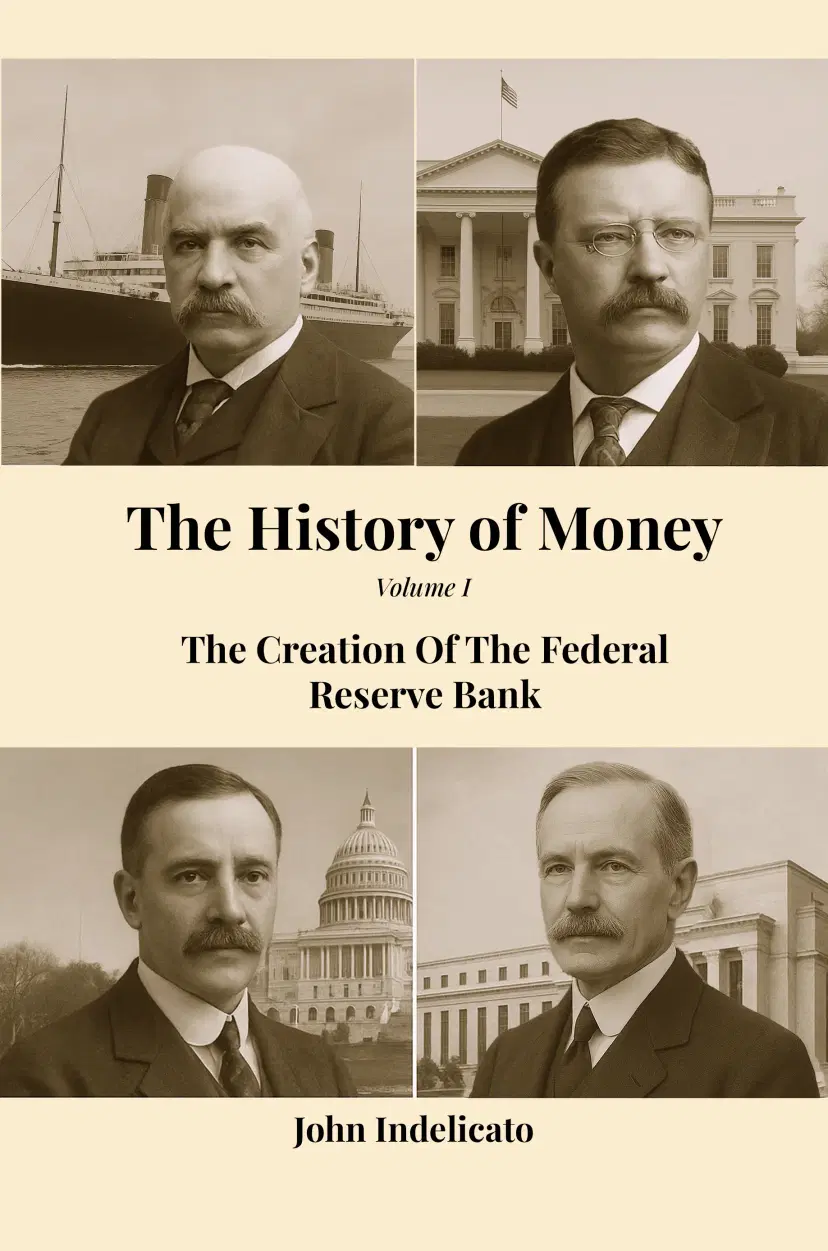
The History of Money: The Creation Of The Federal Reserve Bank
By: John Indelicato
History, as we are taught it, is written by the victors. Yet, everything in our modern world ultimately revolves around money. Therefore, the dominant history-the one that truly explains our present-is the history of money itself. The first 150 years of American history tell this story best: a relentless, violent struggle for control over the American dollar. This financial conflict is an epic tale of panics, wars, and assassinations.
The modern phase of this history begins with the Federal Reserve. This financial parable was set in motion not by a caucus of bankers, but by a natural disaster: the San Francisco Earthquake of 1906. The quake was so powerful that it became the first natural event to genuinely disrupt the London financial markets. This saga, which marked the culmination of a century of financial warfare, ended with the passing of an American titan and the final, decisive creation of the Federal Reserve.
Author Details
Book Keywords
Book Categories
Book Details
A native New Yorker, John's journey began in Brooklyn and continued on Long Island before taking him to the United States Air Force. In 1972, he started his landmark 50- year career on Wall Street at Merrill Lynch. He quickly distinguished himself, becoming a member and precious metals floor trader on the New York Mercantile Exchange (NYMEX) just two years later. John's expertise led him to travel the world, consulting with high-net-worth investors on crucial topics like risk management, portfolio hedging, and market arbitrage.
Our Center Of Learning
A place where you can be educated on matters of all things books!

How Long Does It Take to Write a Book with a Ghostwriter?
Wondering about the ghostwriting timeline? Learn every phase of the book writing process, what affects your timeline, and how Best Selling Publisher delivers faster.

How Professional Ghostwriters Write Books Across Every Genre
Discover how professional ghostwriters craft books across fiction, memoir, business, and more. Learn the process and how to hire the right ghostwriter for your book.

Why Self-Published Authors Need a Website for Long-Term Book Marketing
Self-published authors who skip building a website are leaving long-term book sales on the table. Here's why it is the most powerful marketing tool you can own.
FAQs
The book aims to explain the evolution of money and banking systems. It traces the journey from early barter systems and commodity-based currencies to modern centralized financial institutions, culminating in the creation of the Federal Reserve.
Yes. It explores the shift from asset-backed currencies like gold to fiat money, highlighting the economic and political factors that led nations to abandon the Gold Standard.
The book provides an in-depth look at the establishment of the Federal Reserve in 1913. It covers key events such as the Jekyll Island meeting, legislative developments, and the expansion of the Fed’s role in shaping global monetary policy.
The book is written for a general audience despite covering complex financial topics. It is ideal for students, finance professionals, and readers interested in understanding how modern monetary systems work.
Yes. It examines how money creation is linked to debt and how this relationship has influenced inflation across different historical periods.
Yes. While the focus is historical, the book connects past monetary systems to modern developments such as cryptocurrencies, comparing decentralized models with traditional centralized banking systems.
The tone is analytical and educational. It presents historical developments in a clear and structured way while also discussing the debates and controversies surrounding monetary systems.
Yes. The book often includes diagrams and visual explanations to help readers understand complex financial systems such as fractional reserve banking and monetary flow structures.
The Panic of 1907 is presented as a key turning point that exposed weaknesses in the banking system. It is shown as a major factor that led to the eventual creation of a centralized banking authority.
The central message is that money is a dynamic social and political tool. Understanding its history helps readers better interpret modern economic systems and the influence of central banking on everyday life.
No Matter What Choice You Make…
Discuss Your Next Project Step
Best Selling Publisher coordinates the editing, design, formatting, metadata, publishing setup, and launch support included in the written scope. Authors review and approve deliverables at defined checkpoints; platform reach and commercial results still depend on the selected channels and market response.

It's Time to Write Your Book!
Now that you have an expert book editing,
and publishing agency. What are you waiting for?