
Every Book Genre Explained So You Can Find Your Perfect Read
Have you ever stood in a bookstore or scrolled endlessly through Amazon and felt completely lost about what to pick next? You are not alone. With millions of books published every single year, figuring out which type of book is right for you can feel overwhelming. But here is the good news: once you understand the different types of books and what makes each genre unique, finding your next great read becomes one of the easiest and most exciting things in the world.
Whether you are drawn to heart-pounding thrillers, inspiring business books, emotional memoirs, or colorful picture books for your little ones, every type of book has something special to offer. In this guide, we are going to walk you through every major book genre: fiction, non-fiction, autobiography, and children's books along with all the sub-genres that fall under each one.
By the time you finish reading this, you will know exactly what kind of reader you are and what your next book should be.
What Are the Main Types of Books?
Before we dive deep, let us quickly understand how books are organized at the highest level. All books generally fall into four main categories:
- Fiction - Stories and worlds created from imagination
- Non-Fiction - Real information, real events, real people
- Autobiography & Biography - Real life stories told in depth
- Children's Books - Stories and content crafted specifically for young readers
Each of these four categories has its own world of sub-genres, styles, and reading experiences. Let us explore each one in detail.
Fiction Books and the Genres That Define Them
Fiction is perhaps the most beloved category of books in the world. At its core, fiction is storytelling narratives created from the imagination of an author, featuring characters, worlds, and events that may not exist in real life but feel completely real when you are reading them.
What makes fiction so powerful is its ability to take you somewhere else entirely. You can solve a murder mystery in London, fall in love in Paris, explore a galaxy far away, or battle dragons in a medieval kingdom all without leaving your couch. Fiction books have the unique power to build empathy, spark imagination, and offer an escape from everyday life.
There are many types of fiction books, and each genre delivers a completely different reading experience. Here are the four most widely read fiction genres that readers keep coming back to.
Mystery & Thriller
If you love suspense, twists, and that feeling of not being able to put a book down at 2 AM, mystery and thriller fiction was made for you. These books are built around tension. There is always a question that needs answering, a crime that needs solving, or a danger that needs escaping.

Mystery books typically center around a crime, most often a murder and follow a detective or amateur sleuth as they piece together clues to uncover the truth. The joy of mystery novels lies in the puzzle. Authors like Agatha Christie mastered this art so brilliantly that books like And Then There Were None still keep readers guessing decades after they were first published.
Thriller books take things a step further by adding urgency and danger. In a thriller, the stakes are higher, the pace is faster, and the protagonist is usually in direct danger. Think of Gillian Flynn's Gone Girl, a masterclass in psychological tension where you never quite know who to trust or Thomas Harris's The Silence of the Lambs, which redefined what a thriller could be.
What makes this genre so addictive is the combination of plot-driven storytelling and emotional stakes. You are not just solving a puzzle you are racing against time.
Key characteristics of Mystery & Thriller:
- A central crime, mystery, or dangerous situation
- A protagonist trying to uncover the truth or survive
- Plot twists and red herrings that keep you guessing
- High stakes and fast-paced narrative
Romance
Romance is consistently one of the best-selling fiction genres in the world and for very good reason. At its heart, a romance novel tells the story of two people falling in love, and it always delivers an emotionally satisfying ending. But do not let that simplicity fool you; romance fiction is rich, diverse, and emotionally complex.

Romance novels span a huge range of settings and styles. You have contemporary romance set in modern-day cities, historical romance set in Victorian England or Regency-era ballrooms, paranormal romance featuring vampires and shifters, and even romantic suspense that blends love with danger.
Some of the most iconic romance novels include Jane Austen's Pride and Prejudice, a timeless story of love, pride, and misunderstanding and more recently Colleen Hoover's It Ends with Us, which became a global phenomenon and introduced a whole new generation to the emotional power of romance fiction.
What romance readers love most is the emotional journey. You invest in the characters, you root for them, you feel every heartbreak and every moment of joy alongside them. And that guaranteed happy ending? There is nothing quite like it.
Key characteristics of Romance:
- A central love story between two main characters
- Emotional depth and character development
- Conflict that keeps the couple apart before they come together
- A satisfying, optimistic ending
Science Fiction (Sci-Fi)
Science fiction is where imagination meets intellect. Sci-fi books explore ideas about technology, space, the future, artificial intelligence, and what it truly means to be human, often set in worlds and timelines far beyond our own. If you are someone who loves asking "what if?" then science fiction is your genre.
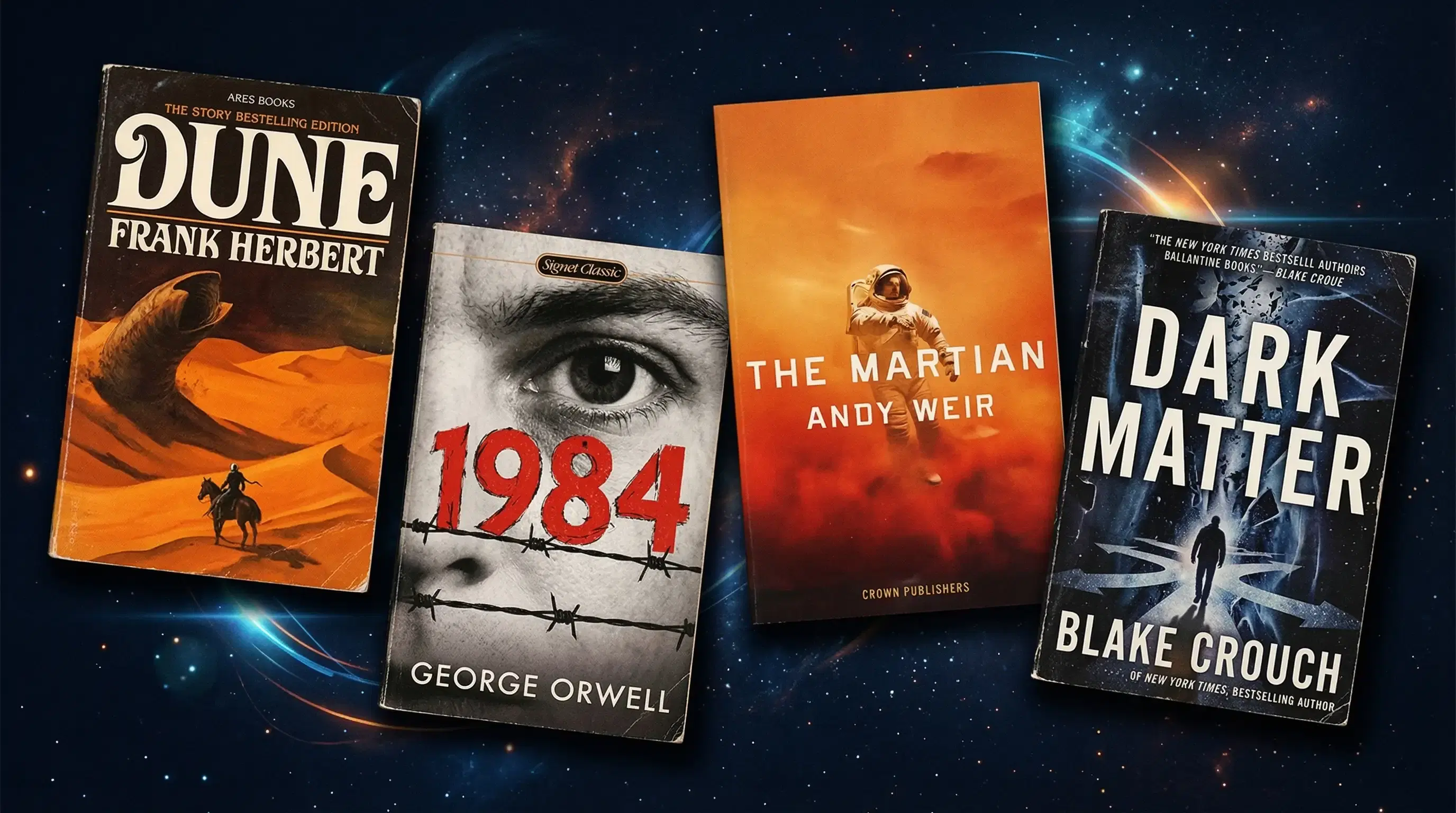
What separates great sci-fi from everything else is its ability to use fantastical settings to comment on very real human issues. George Orwell's 1984 is set in a dystopian future, but it is really a warning about authoritarianism and the erosion of freedom themes that feel more relevant today than ever. Frank Herbert's Dune builds an entirely alien world but tells a deeply human story about power, religion, and ecology.
More recently, Andy Weir's The Martian brought a fresh, humor-infused take on space survival fiction, while Blake Crouch's Dark Matter explored parallel universes in a way that felt both scientifically grounded and emotionally thrilling.
Science fiction pushes boundaries. It asks big questions, imagines bold futures, and challenges readers to think differently about the world they live in.
Key characteristics of Science Fiction:
- Futuristic or alternate settings often involving advanced technology
- Exploration of scientific concepts, space, or artificial intelligence
- Philosophical and social commentary woven into the narrative
- World-building that feels detailed and believable
Fantasy
Fantasy is the genre of the impossible made possible. Dragons, magic systems, ancient prophecies, enchanted kingdoms fantasy fiction builds entire worlds from scratch and invites readers to lose themselves completely inside them. If you have ever wanted to attend a school of witchcraft, ride into battle on dragonback, or wield a sword forged in an ancient forge, fantasy has been waiting for you.

The scope of fantasy fiction is enormous. You have high fantasy like J.R.R. Tolkien's The Lord of the Rings, which essentially invented the modern fantasy genre where entire civilizations, languages, and mythologies are created. Then there is urban fantasy, where magical elements exist within the real modern world. And of course, there is the beloved young adult fantasy, with J.K. Rowling's Harry Potter series introduced millions of children and adults alike to the pure magic of reading.
More recently, fantasy has expanded to include incredibly diverse voices and stories. Brandon Sanderson's The Way of Kings is celebrated for its breathtaking world-building and intricate magic systems, while Sarah J. Maas's A Court of Thorns and Roses brought a more emotionally driven, adult tone to the genre.
Fantasy at its best does not just entertain, it creates worlds so vivid and characters so real that readers grieve when the story ends.
Key characteristics of Fantasy:
- Magical systems, mythical creatures, or supernatural elements
- Extensive world-building with unique rules and histories
- Epic quests, battles between good and evil, or personal journeys
- Rich, immersive storytelling that rewards patient readers
Non-Fiction Books and the Categories That Inform and Inspire
Non-fiction is the category of books that deals with real information, real events, and real ideas. Unlike fiction, non-fiction does not invent; it investigates, explains, teaches, and documents. And while some people assume non-fiction must be dry or academic, the reality could not be more different. The best non-fiction books are just as gripping, inspiring, and transformative as any novel.
Non-fiction books have the unique power to change how you think, how you work, and how you see the world. They can teach you a new skill, introduce you to a fascinating period of history, explain how the universe works, or show you how to build a business from the ground up. Whatever you want to learn or understand, there is a non-fiction book waiting to teach you.
Business & Finance
Business and finance books are among the most consistently popular non-fiction categories in the world and for good reason. Whether you are an entrepreneur building a startup, a professional climbing the corporate ladder, or simply someone who wants to make smarter decisions with money, this genre has something genuinely valuable to offer.

The best business books do not just give you information, they give you a completely new way of thinking. Robert Kiyosaki's Rich Dad Poor Dad challenged everything people believed about money and financial independence when it was first published, and it continues to change lives today. Dale Carnegie's How to Win Friends and Influence People remains one of the bestselling books of all time because its lessons about human connection are timeless.
More recently, books like Atomic Habits by James Clear which technically straddles business and self-improvement have shown that business books can be practical, science-backed, and deeply readable all at once. And for anyone interested in startup culture, Ben Horowitz's The Hard Thing About Hard Things offers a brutally honest look at what it really takes to build a company.
Key characteristics of Business & Finance:
- Practical, actionable advice grounded in real experience
- Case studies and real-world examples
- Focus on productivity, leadership, entrepreneurship, or wealth-building
- Written by practitioners, not just theorists
History
History books bring the past to life in ways that textbooks never could. The best history writing is narrative-driven, deeply researched, and reads almost like a thriller because the events really happened. History non-fiction helps us understand how the world came to be the way it is, and why that matters today.

What makes history books so compelling is the realization that the people of the past were just as complex, ambitious, and flawed as we are today. Erik Larson's The Devil in the White City tells the true story of a serial killer operating during the 1893 Chicago World's Fair and it reads like a novel. Yuval Noah Harari's Sapiens takes an even broader view, tracing the entire history of humankind from prehistoric times to the modern age in a way that is accessible, provocative, and endlessly fascinating.
For readers who want to understand specific events, books like Laura Hillenbrand's Unbroken, the true story of a World War II survivor deliver deeply personal narratives that illuminate broader historical truths through individual human experience.
Key characteristics of History:
- Thoroughly researched and factually accurate
- Narrative-driven storytelling rooted in real events
- Strong sense of time, place, and historical context
- Often draws connections between past events and present realities
Science & Technology
Science and technology books make the complex accessible. They take the most mind-bending discoveries in physics, biology, neuroscience, and technology and present them in ways that any curious reader can understand and enjoy. If you have ever looked up at the night sky and wondered what is really out there, or marveled at how a tiny device in your pocket connects you to the entire world, science books will feed that curiosity in deeply satisfying ways.
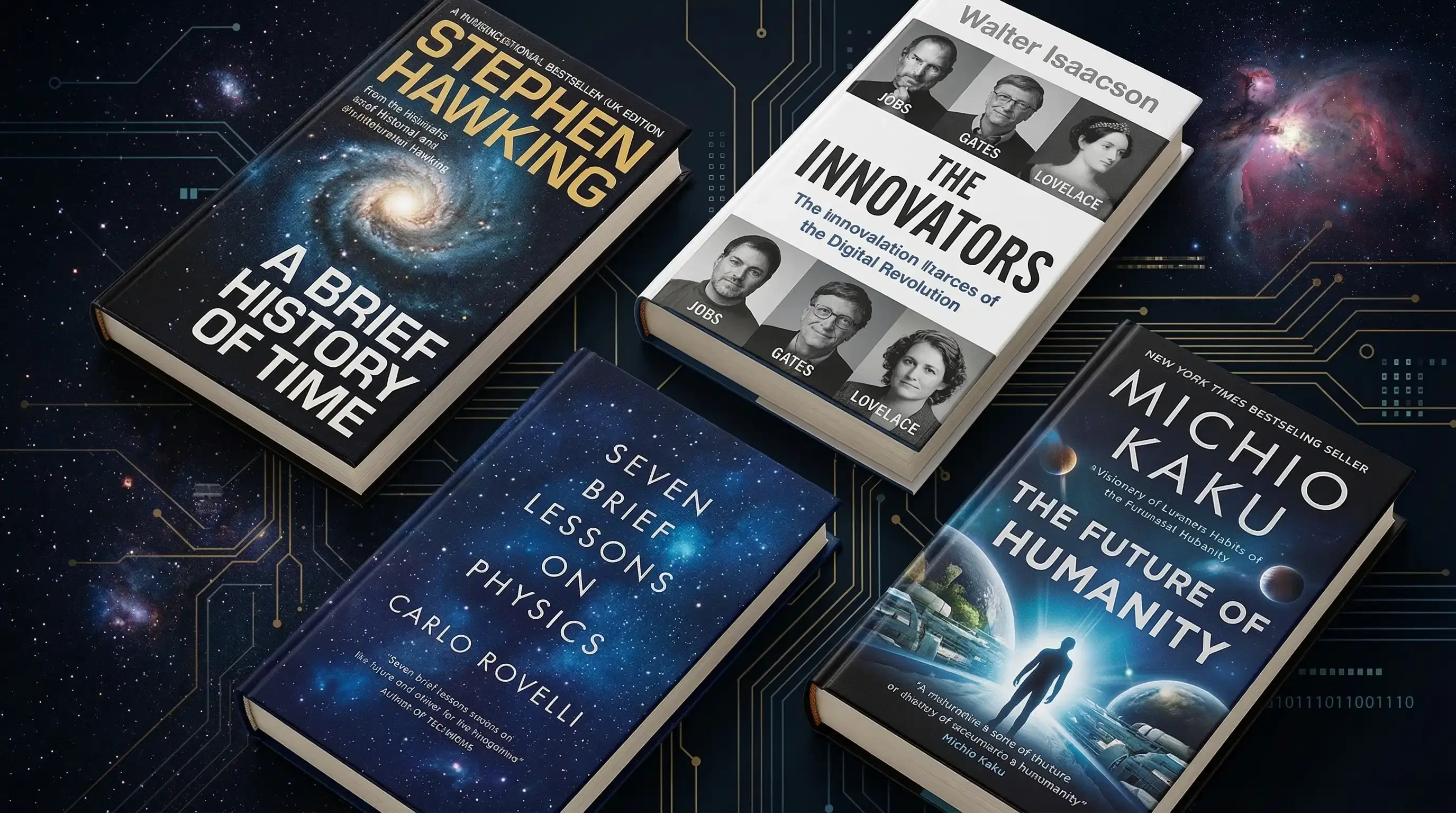
Stephen Hawking's A Brief History of Time is perhaps the most famous example of science writing that successfully bridges the gap between academic knowledge and general readership. More recently, Michio Kaku's The Future of Humanity explores our species' potential to colonize other planets, while Carlo Rovelli's Seven Brief Lessons on Physics introduces general readers to quantum mechanics and relativity through writing so beautiful it feels poetic.
On the technology side, Walter Isaacson's The Innovators traces the history of the digital revolution through the brilliant minds who built it a book that feels as relevant and exciting today as when it was first published.
Key characteristics of Science & Technology:
- Complex ideas explained in accessible, engaging language
- Grounded in research, data, and expert knowledge
- Explores the natural world, human biology, physics, or technological innovation
- Often challenges conventional thinking and expands worldview
Health & Wellness
Health and wellness books have seen an extraordinary rise in popularity over the past decade, and it is easy to understand why. In a world that moves faster than ever, readers are actively looking for guidance on how to sleep better, eat smarter, manage stress, build healthier habits, and feel genuinely good in their own bodies and minds

What makes the best health and wellness books stand out is that they back their advice with real science while still being warm, practical, and deeply relatable. Matthew Walker's Why We Sleep completely transformed how millions of people think about sleep making a compelling, research-backed case for why sleep is the single most important thing you can do for your health. Dr. Mark Hyman's work on food and its relationship to chronic disease has similarly sparked a worldwide conversation about what we eat and why it matters.
On the mental wellness side, books like Bessel van der Kolk's The Body Keeps the Score have opened up important conversations about trauma, healing, and the mind-body connection in ways that feel both scientifically rigorous and deeply humane.
Key characteristics of Health & Wellness:
- Science-backed advice on physical or mental health
- Practical, actionable guidance readers can apply to daily life
- Empathetic, accessible tone that meets readers where they are
- Focus on long-term wellbeing rather than quick fixes
Autobiography and Biography Books That Tell Real Life Stories
There is something uniquely powerful about reading the true story of a real human life. Autobiography and biography books sit at the intersection of history, psychology, and storytelling; they give us an intimate window into the minds and experiences of real people, whether they are world leaders, artists, athletes, or ordinary individuals who lived extraordinary lives.
The difference between an autobiography and a biography is simple but important. An autobiography is written by the person themselves; it is their own voice, their own memories, their own interpretation of their life. A biography is written by someone else, a journalist, historian, or writer who researches and reconstructs a life from the outside. Both offer tremendous value, but they deliver very different reading experiences.
Here are the three main types within this category.
Personal Autobiography
A personal autobiography is one of the most intimate forms of writing that exists. When someone sits down to write the story of their own life, they are making a profound act of courage and vulnerability. They are saying: this is what happened to me, this is who I am, and this is what I learned.
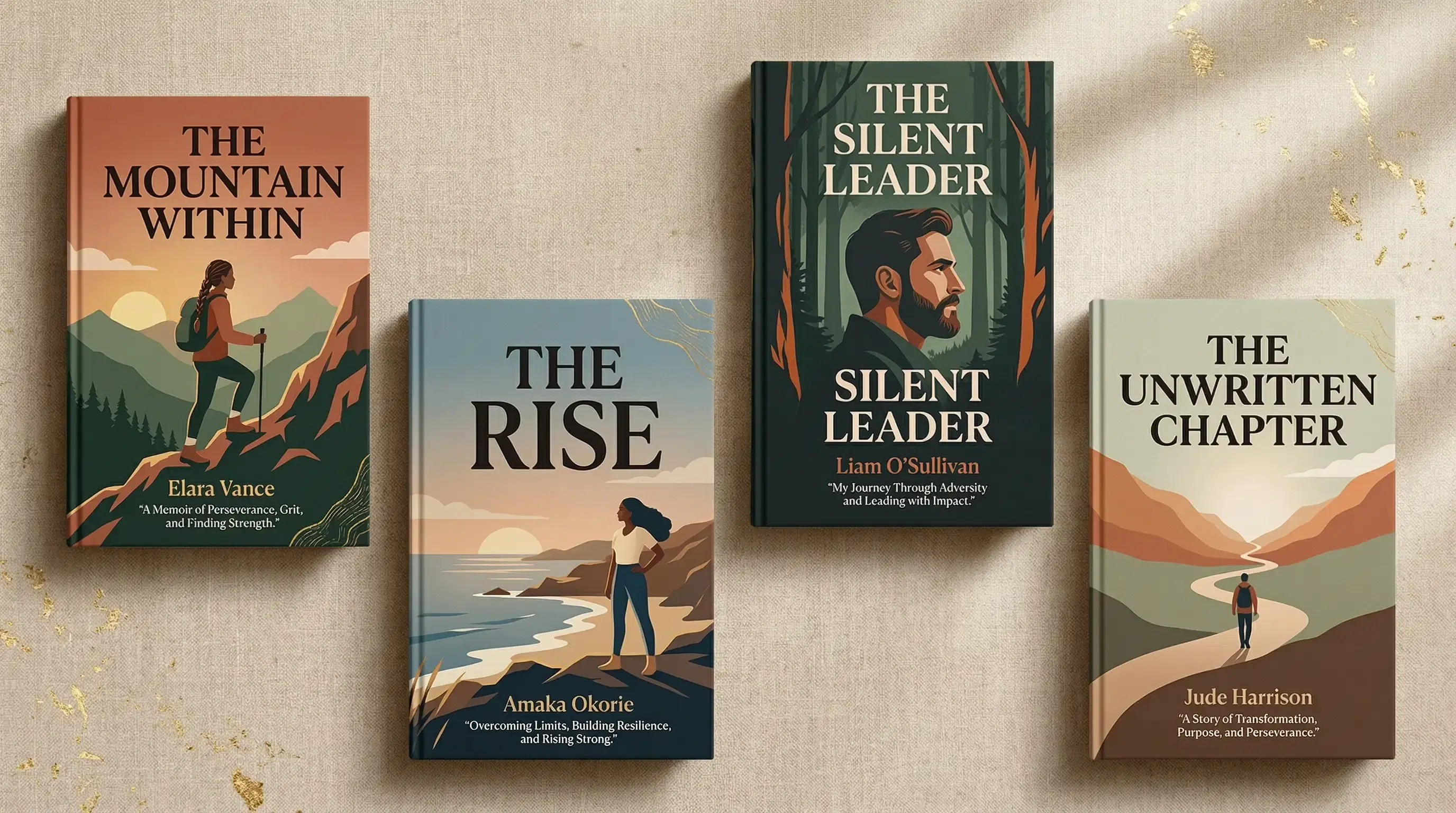
Great autobiographies do more than recount events; they offer insight, reflection, and wisdom earned through real experience. Nelson Mandela's Long Walk to Freedom is one of the most celebrated autobiographies ever written, a sweeping account of his life from a rural South African childhood to 27 years of imprisonment to his eventual presidency. It is a story of extraordinary resilience and moral courage that continues to inspire readers around the world.
More recently, Michelle Obama's Becoming became a cultural phenomenon, an honest, warm, and beautifully written account of her journey from Chicago's South Side to the White House, touching on identity, ambition, marriage, and motherhood in deeply relatable ways.
Key characteristics of Personal Autobiography:
- Written in first person by the subject themselves
- Covers a significant span of the author's life
- Blends personal narrative with broader historical or social context
- Offers reflection and insight, not just chronological storytelling
Memoir
A memoir is often confused with autobiography, but they are actually quite different in one important way. While an autobiography aims to cover a whole life, a memoir focuses on a specific period, theme, or experience from the author's life. It is more intimate, more focused, and often more emotionally raw.

Think of a memoir as a deep dive into one particular chapter rather than the whole book of a life. Mary Karr's The Liars' Club is a stunning memoir about growing up in a turbulent Texas family; it does not try to be a complete life story, it simply captures one essential truth about one essential time. Tara Westover's Educated, one of the most talked-about memoirs of the past decade focuses on her journey from a survivalist family in rural Idaho to earning a PhD from Cambridge University. It is a book about education, identity, and the painful complexity of family loyalty.
What memoirs do brilliantly is create emotional connection. Because the focus is narrower and the writing is more reflective, readers often feel closer to the author of a memoir than any other type of book.
Key characteristics of Memoir:
- Focused on a specific period, experience, or theme rather than an entire life
- Deeply personal and emotionally reflective
- Written in first person with a strong, distinctive authorial voice
- Often explores universal themes through deeply personal experience
Celebrity Biography
Celebrity biographies occupy a fascinating space in the publishing world. They combine the intimacy of personal storytelling with the fascination of fame giving readers a behind-the-scenes look at the lives of musicians, actors, athletes, business moguls, and cultural icons they have admired from a distance.

The best celebrity biographies go far beyond gossip. Walter Isaacson's Steve Jobs written with Jobs's cooperation and based on over 40 exclusive interviews is a genuinely illuminating portrait of one of the most complex and influential figures of the modern era. It tells the story of genius and vision, but also of profound personal failings and difficult relationships. Similarly, Robert Caro's multi-volume biography of Lyndon B. Johnson is widely considered one of the greatest works of biography ever written a meticulous, deeply researched examination of power and politics through the lens of one man's extraordinary life.
On the entertainment side, biographies like Bowie by Marc Spitz and countless books about The Beatles continue to sell in enormous numbers, driven by a readership that wants to understand not just the music but the people behind it.
Key characteristics of Celebrity Biography:
- Focuses on a well-known public figure
- Extensively researched, often including interviews and primary sources
- Explores both the public achievements and private life of the subject
- Provides cultural context that makes the subject's story meaningful beyond celebrity
Children's Books and the Stories That Shape Young Minds
Children's books hold a very special place in the world of publishing and in the hearts of readers of all ages. The books we read as children shape how we see the world, how we understand relationships, how we develop empathy, and how we fall in love with the act of reading itself.
What makes children's books so remarkable is the incredible range they cover. From simple picture books that help toddlers learn their first words to young adult novels that tackle complex themes of identity and belonging, children's literature meets young readers exactly where they are and grows with them.
Children's books are also among the most visually creative in all of publishing illustration, design, and typography all play huge roles in how these books communicate with their readers. And great children's books are not just for children, they are loved by parents, teachers, and adults who return to them again and again throughout their lives.
Here are the four main types of children's books.
Picture Books
Picture books are where the love of reading almost always begins. Designed for young readers, typically ages 4 to 8, picture books use a beautiful combination of simple text and vivid illustration to tell stories, teach concepts, and spark imagination
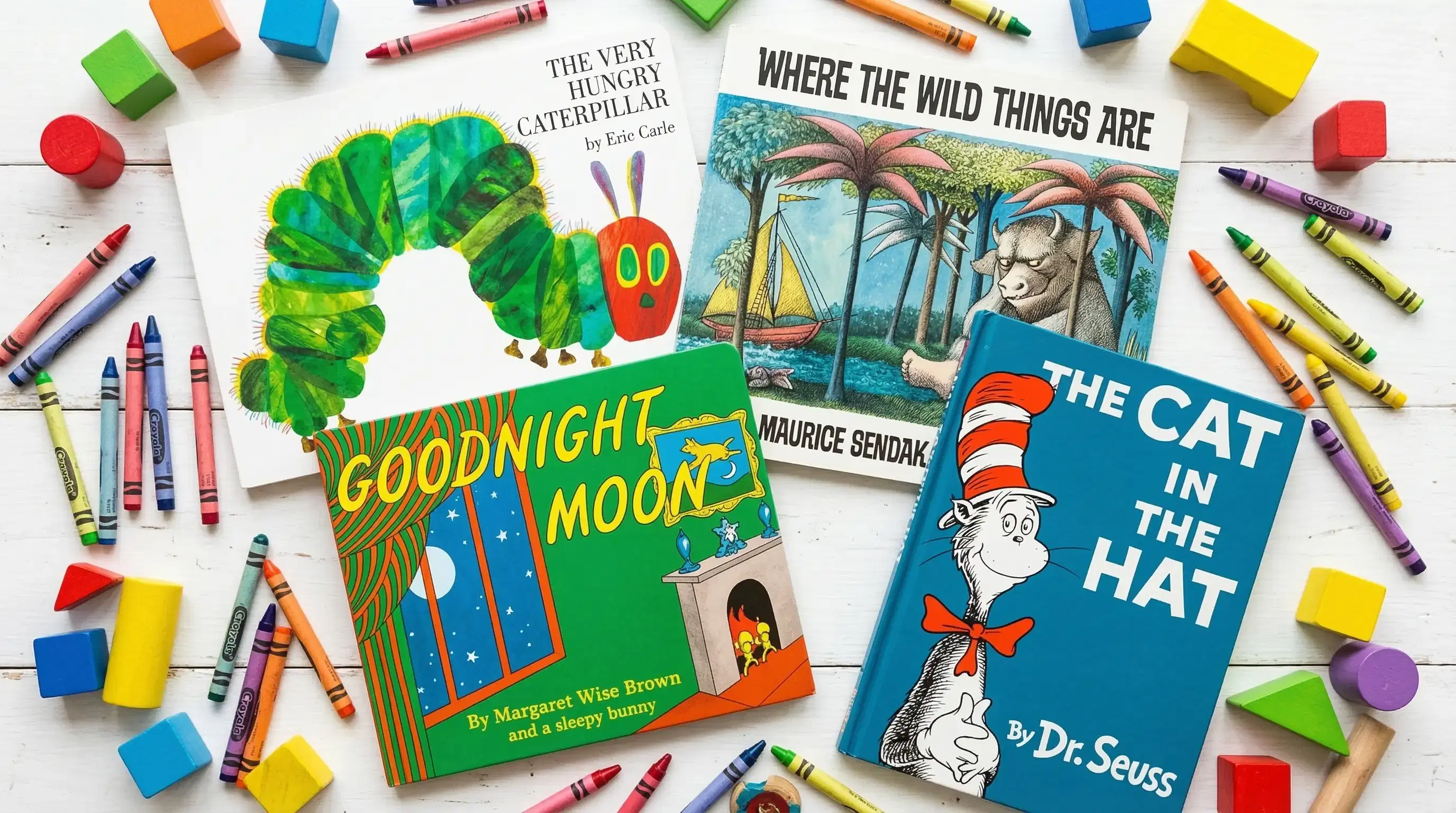
What makes great picture books special is how much they achieve with so little. In just 32 pages and a few hundred words, a picture book can explore themes of friendship, loss, courage, curiosity, and belonging in ways that resonate deeply with young children. Maurice Sendak's Where the Wild Things Are takes a child's bedtime imagination and transforms it into a journey about anger, adventure, and the comfort of home all in under 400 words.
Eric Carle's The Very Hungry Caterpillar has sold over 55 million copies worldwide not just because it is charming, but because it teaches counting, days of the week, and the concept of transformation through irresistibly beautiful collage art. And Dr. Seuss created an entire world of picture books from The Cat in the Hat to Oh, the Places You'll Go! that have become cultural touchstones for multiple generations.
Key characteristics of Picture Books:
- Short text designed to be read aloud by parents or teachers
- Vivid, expressive illustration that carries much of the storytelling
- Simple themes and vocabulary appropriate for ages 4-8
- Often rhythmic or repetitive language that young children love
Early Reader Books
Early reader books sometimes called beginning chapter books bridge the gap between picture books and longer novels. Designed for children roughly between 5 and 8 years old who are learning to read independently, these books feature larger text, shorter chapters, more illustrations, and vocabulary carefully chosen to build reading confidence.

The goal of early reader books is not just to tell a story, it is to make the experience of reading feel exciting, achievable, and rewarding for young children taking their first independent reading steps. Series like Elephant and Piggie by Mo Willems and Frog and Toad by Arnold Lobel are perfect examples of warm, funny, and emotionally resonant stories told in a format that beginning readers can tackle and master on their own.
The Magic Tree House series by Mary Pope Osborne has introduced millions of children to history and adventure through early chapter books that feel like real novels while remaining completely accessible to young readers.
Key characteristics of Early Reader Books:
- Larger font and generous white space on the page
- Short chapters that give young readers achievable milestones
- Simple but engaging plots with relatable child protagonists
- Illustrations on most pages to support text comprehension
Middle Grade
Middle grade books occupy one of the most exciting spaces in all of children's publishing. Aimed at readers between roughly 8 and 12 years old, these are full-length novels that take young readers seriously with complex plots, fully developed characters, genuine emotional depth, and themes that matter.
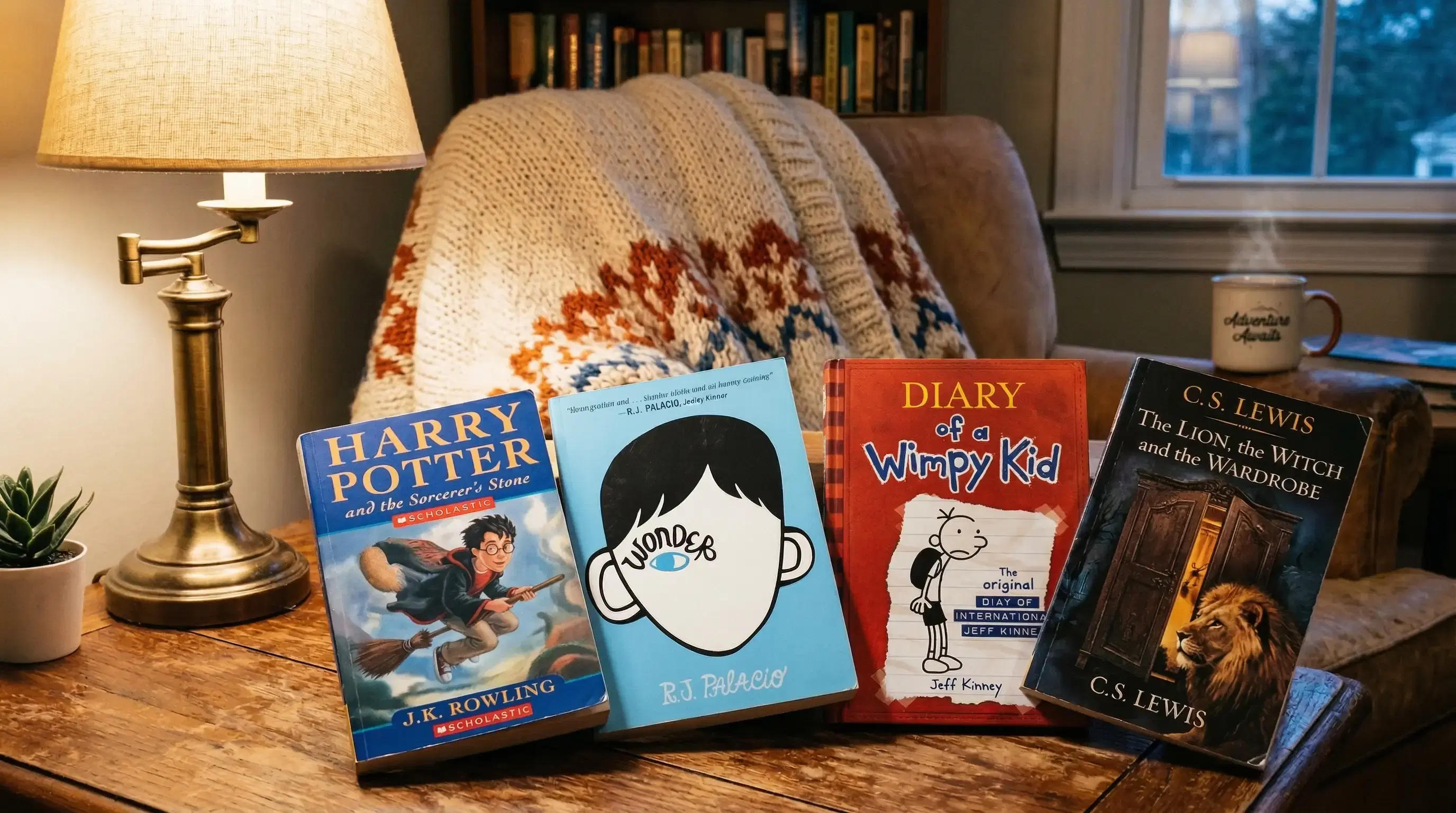
Middle grade is also the genre that produces some of the most beloved and commercially successful books in publishing history. J.K. Rowling's Harry Potter and the Sorcerer's Stone began as a middle grade novel about an 11-year-old discovering he is a wizard and became the bestselling book series of all time. C.S. Lewis's The Lion, the Witch and the Wardrobe has enchanted readers of this age group for generations.
More recently, R.J. Palacio's Wonder, the story of a boy with a facial difference navigating his first year at a mainstream school, became a global phenomenon because it addressed themes of kindness, acceptance, and belonging with extraordinary warmth and honesty. Jeff Kinney's Diary of a Wimpy Kid series demonstrated that middle grade could also be hilarious, irreverent, and completely irresistible to readers who claimed not to like reading.
Key characteristics of Middle Grade:
- Full-length novels typically between 20,000 and 50,000 words
- Protagonists are usually between 8 and 12 years old
- Themes of friendship, identity, courage, and belonging
- Compelling plots with emotional stakes that feel real to young readers
Young Adult (YA)
Young adult fiction is one of the most dynamic, commercially powerful, and culturally significant categories in all of publishing today. Aimed at readers between roughly 13 and 18 years old though widely read by adults of all ages YA books tackle some of the most complex and important themes in all of literature: identity, love, mental health, social justice, grief, and the search for belonging.

What makes YA so powerful is the intensity of its emotional honesty. YA authors understand that teenagers are experiencing things for the first time, first love, first loss, first real confrontations with injustice and mortality and they write with a corresponding intensity and authenticity that readers of all ages find deeply moving.
Suzanne Collins's The Hunger Games became a worldwide cultural phenomenon because it combined gripping dystopian action with a fierce, morally complex female protagonist and genuinely challenging questions about power, media, and sacrifice. John Green's The Fault in Our Stars showed the world that YA could be literary, devastatingly honest about illness and mortality, and laugh-out-loud funny all at once. And Angie Thomas's The Hate U Give used the YA format to deliver one of the most important and timely conversations about race, police brutality, and activism of the past decade.
Key characteristics of Young Adult:
- Protagonists are typically teenagers navigating formative experiences
- Emotionally intense, honest, and often deeply empathetic in tone
- Addresses complex themes including identity, mental health, and social justice
- Hugely diverse in genre; YA spans romance, fantasy, thriller, contemporary, and more
Fiction vs Non-Fiction Books - Understanding the Key Differences
One of the most common questions readers ask, especially those just getting into books, is what exactly separates fiction from non-fiction. The answer is simpler than it might seem, but the implications are fascinating.
Fiction is invented. It comes from the imagination of the author. Characters, events, dialogue, and settings may be inspired by reality, but they are ultimately created. The purpose of fiction is primarily to entertain, move, and create emotional experience though the best fiction also teaches profound truths about what it means to be human.
Non-fiction is real. It deals with actual people, actual events, actual information. The author's job is to research, verify, and present the truth as accurately and engagingly as possible. Non-fiction informs, educates, and documents but the best non-fiction is also beautifully written and deeply compelling to read.
| Fiction | Non-Fiction | |
|---|---|---|
| Content | Imagined stories and characters | Real people, events, and information |
| Purpose | Entertain, inspire, create empathy | Inform, educate, document |
| Examples | Harry Potter, Gone Girl, Dune | Sapiens, Becoming, Atomic Habits |
| Structure | Narrative storytelling | Research-based, often thematic |
| Fact-checking | Not required | Essential |
It is worth noting that some of the most powerful books blur this line beautifully. Creative non-fiction uses novelistic techniques to tell true stories. Historical fiction blends real events with imagined characters. And literary journalism reads like a novel while reporting facts.
Why Your Book Genre Matters for Publishing Success
If you are an author or dreaming of becoming one, understanding book genres is not just interesting, it is essential. The genre your book belongs to affects virtually every decision in the publishing process.
It shapes your target audience.A romance novel and a business book reach completely different readers through completely different channels. Knowing your genre means knowing exactly who you are writing for and how to reach them.
It influences your cover design.Book covers are genre-coded in powerful ways. Thriller readers expect dark, high-contrast covers with bold typography. Romance readers expect covers that convey warmth and emotional connection. Children's books need bright, joyful illustration. Getting your cover design right for your genre is one of the most important factors in whether readers click or scroll past.
It determines your marketing strategy. Different genres live in different communities. Fantasy readers gather on specific Reddit forums, BookTok channels, and convention circuits. Business book readers respond to LinkedIn content and podcast appearances. Understanding your genre means understanding where your readers are and how to talk to them.
It affects pricing and distribution.Genre conventions influence everything from how long your book should be to what price point readers expect to pay. A literary memoir and a mass-market thriller are priced, packaged, and distributed very differently and knowing those conventions gives you a real competitive advantage.
How Best Selling Publisher Helps Authors Across Every Genre
At Best Selling Publisher, we have spent years working with authors across every single genre covered in this guide and we understand that each one requires a different approach, a different strategy, and a different kind of expertise.
Whether you are writing a pulse-pounding mystery thriller, a deeply personal memoir, an epic fantasy saga, a business book built on years of professional experience, or a beautifully illustrated picture book for your child's generation, we have the team, the tools, and the track record to help you bring your vision to life and get it into the hands of readers worldwide.
Our publishing team helps authors navigate the publishing journey from manuscript to finished book, from Amazon listing to global distribution. Our services cover everything an author needs: professional ghostwriting and editing, custom book cover design built for your specific genre, Amazon KDP setup and keyword optimization, and targeted book marketing strategies that reach the right readers.
We do not believe in one-size-fits-all publishing. A children's picture book needs a completely different treatment than a celebrity biography or a science fiction novel and we tailor everything we do to the specific needs of your genre, your story, and your goals as an author.
If you have a story you want to tell, we want to help you tell it in a way that the world will not be able to ignore. Reach out to our publishing team today for a free consultation and let us talk about what your book can become.
From Manuscript to Bestseller - Our Publishing Process
Getting a book published can feel like one of the most daunting things in the world but it does not have to be. At Best Selling Publisher, we have developed a clear, structured process that takes authors from their very first idea all the way to a published, distributed, and actively marketed book.
Here is how we do it:
Step 1 - Concept and Strategy We start by understanding your book, its genre, its target audience, its core message, and your goals as an author. This strategic foundation shapes every decision we make together.
Step 2 - Writing and Editing Whether you come to us with a finished manuscript, a rough draft, or just a powerful idea, our team of professional writers and editors will help craft and refine your book to the highest standard. We match you with editors who specialize in your specific genre.
Step 3 - Cover Design and Formatting Your book's cover is its first impression and in a crowded marketplace, it needs to be extraordinary. Our design team creates genre-appropriate covers that stop readers in their tracks, backed by professional interior formatting that makes your book a pleasure to read.
Step 4 - Publishing and Distribution We handle the complete publishing process from ISBN assignment to Amazon KDP setup, keyword optimization, and distribution to the platforms in your approved plan, so your book is available in the markets those platforms serve.
Step 5 - Marketing and Promotion A great book deserves great readers. Our marketing team develops customized strategies to promote your book across the channels where your target audience actually lives from Amazon advertising and social media to book review outreach and beyond.
Conclusion
Books are one of the greatest gifts human beings have ever given each other. Whether you are escaping into a fantasy world, learning how to build a business, discovering the life of someone who changed history, or watching a child fall in love with reading for the very first time through a beautifully illustrated picture book every type of book has the power to change you in ways you cannot fully predict.
We hope this guide has helped you understand the rich, diverse landscape of book genres and given you a clearer sense of what kind of reader you are and what your next great read should be.
And if you are an author with a story to tell, remember: the world needs your book. Whatever genre you write in, whatever story you are burning to share, Best Selling Publisher is here to help you share it with the world. Explore our publishing services today and take the first step toward becoming the author you were always meant to be.
FAQs
The four main categories of books are fiction, non-fiction, autobiography and biography, and children's books. Each category contains multiple sub-genres with their own distinct characteristics, conventions, and readerships.
Romance is consistently the bestselling fiction genre worldwide, while self-help and business books dominate non-fiction sales. In children's publishing, middle grade and young adult consistently produce the biggest commercial successes.
An autobiography covers the entirety of a person's life from birth to the present, while a memoir focuses on a specific period, relationship, or experience. Memoirs tend to be more thematic and emotionally focused, while autobiographies aim to be more comprehensive.
Young adult books are primarily written for readers between 13 and 18 years old. However, YA is one of the most widely read categories across all age groups. A significant portion of YA readers are adults who love the genre's emotional intensity and storytelling quality.
The best way to identify your book's genre is to think about who your ideal reader is, what emotional experience you want them to have, and which existing books your story most closely resembles. If you are unsure, our publishing team at Best Selling Publisher can help you identify possible genres and document the selected category in the project brief.
Absolutely. Many of the most successful books blend genres: romantic suspense combines romance with thriller elements, historical fantasy merges history and magic, and narrative non-fiction uses fictional storytelling techniques to tell true stories. Genre blending is increasingly common and can be a real strength in the right hands.