
What the Best Health and Wellness Books Teach You That Your Doctor Never Has Time To

Your doctor has seven minutes with you. A great health book has as long as you need.
That seven-minute figure is not a complaint about doctors. Most doctors are dedicated, intelligent, and genuinely committed to their patients’ wellbeing. But they are operating inside a healthcare system that does not give them the time to do everything they know needs to be done. They can address the symptom in front of them. They cannot always explain the root cause behind it. They can prescribe the medication. They cannot always explain the lifestyle factors that would reduce the need for it. They can advise you to eat better, sleep more, and manage your stress. They almost never have the time to explain why those things matter at the level of detail that would actually change how you behave.
Health and wellness books fill this gap, and the authors who invest in professional health and wellness book publishing services are delivering something the healthcare system simply cannot provide at scale. At their best, they give you the depth of understanding that transforms health advice from abstract instruction into genuine motivation, because when you understand why sleep deprivation damages your immune system at a cellular level, or why chronic stress accelerates aging in measurable ways, or why the gut microbiome affects your mood and cognition as well as your digestion, you do not just know that you should take care of your health. You understand it. And understanding is the foundation of change.
In this guide, we are going to explore what makes health and wellness books so uniquely powerful, which ones have genuinely changed how people live, and why investing in health book publishingservices may be one of the most impactful decisions a health professional or researcher can make on their health journey right now.
What Health Books Give You That a Doctor’s Appointment Cannot
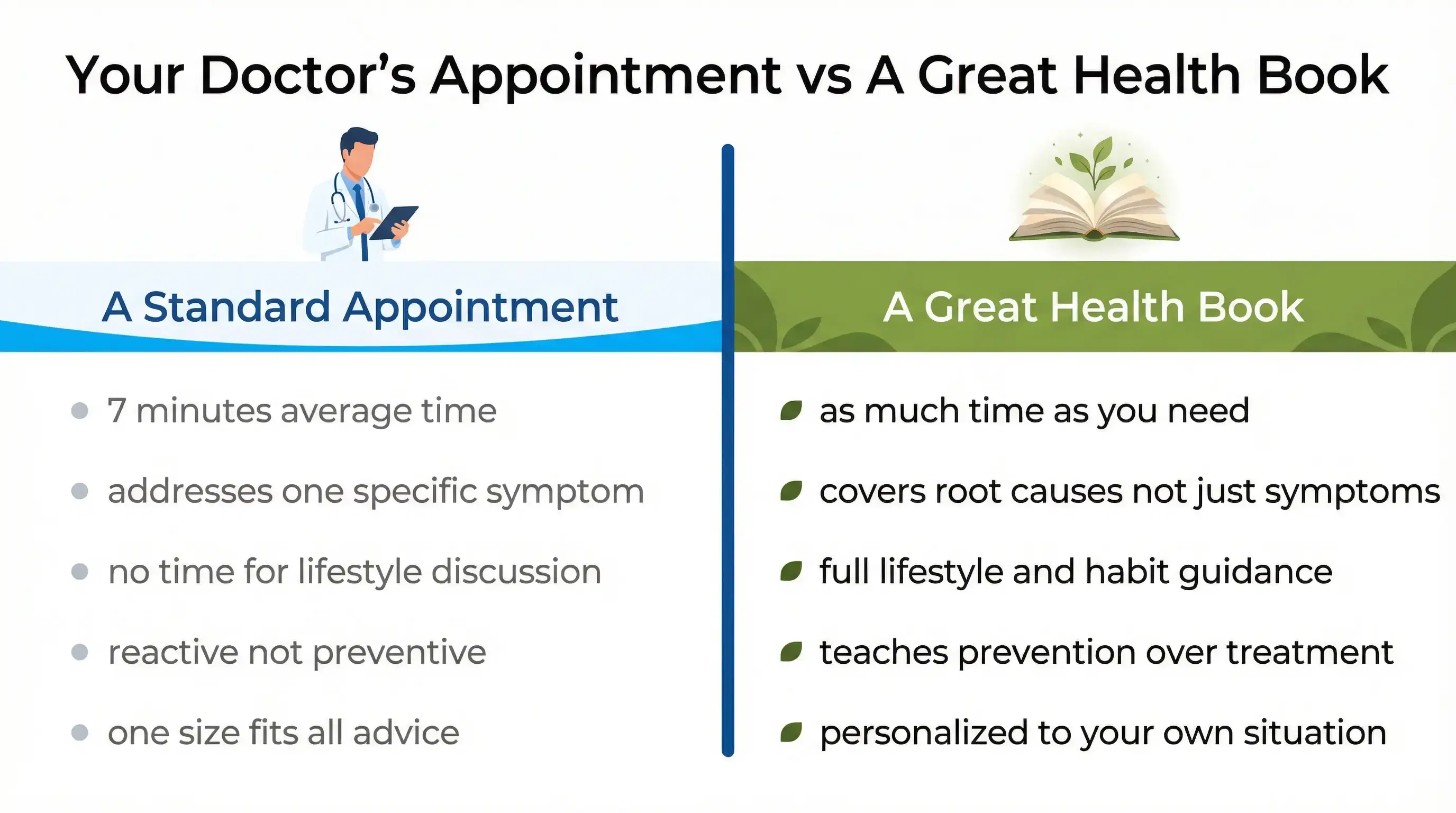
The most fundamental thing a great health book gives you is time, the time to understand your body and your health at a depth that a brief medical appointment simply cannot provide. But time is only the beginning.
A well-researched health book gives you the why behind the what. Modern medicine is extraordinarily good at diagnosing and treating specific conditions. It is less consistently good at explaining the upstream factors that create those conditions in the first place, the lifestyle patterns, the environmental influences, the behavioral choices that accumulate over years and decades into health outcomes. The best health books trace this upstream causality with the kind of depth and clarity that makes the reader feel genuinely equipped to make different choices, not just told that they should.
Health books also shift people from a reactive to a proactive relationship with their own wellbeing. This is why the demand for health and wellness book publishing services has grown steadily alongside the broader preventive health movement. Most people engage with the healthcare system reactively, when something goes wrong. Great health books teach a different approach: one in which understanding your body’s systems, the factors that support them, and the factors that undermine them becomes a daily practice rather than an emergency response. This shift from reactive to proactive is the single most valuable transformation a health book can produce in its reader, and the research on health outcomes consistently shows that it produces better results across virtually every dimension of health.
The Two Sides of Health and Wellness Books
Health and wellness books cover a broad terrain, and understanding the two main areas helps you find the books that address what you most need right now.
Physical health books focus on the body, sleep, nutrition, exercise, disease prevention, and the biology of aging. These are books grounded in research, often written by doctors, scientists, or health journalists who have synthesized the best available evidence into practical guidance. Matthew Walker’s Why We Sleep is the defining example of this form for the current era: a book that presents the science of sleep so clearly and so compellingly that the majority of its readers report permanently changing their sleep habits after reading it. Michael Greger’s How Not to Die brings the same evidence-based approach to nutrition, presenting the research on diet and disease in a way that is both scientifically rigorous and genuinely readable.
Mental and emotional wellness books address the inner life, stress, anxiety, trauma, depression, resilience, and the mindset shifts that support long-term psychological health. Bessel van der Kolk’s The Body Keeps the Score, which explores how trauma is stored in the body and what it takes to heal from it, has become one of the most widely read health books of the 21st century, not because trauma is a new subject, but because van der Kolk explains it in a way that finally makes sense of experiences that millions of readers had been unable to articulate.
Increasingly, the best health books recognize that these two sides are not separate, that physical health and mental health are deeply interconnected systems that influence each other in ways that traditional medicine has historically been slow to acknowledge. The gut-brain axis, the relationship between sleep and mental health, the impact of exercise on depression and anxiety, the physiological effects of chronic stress, these connections are the frontier of the most exciting health writing being published right now.
The Health Habits That Science Says Actually Work
The health and wellness book category is enormous
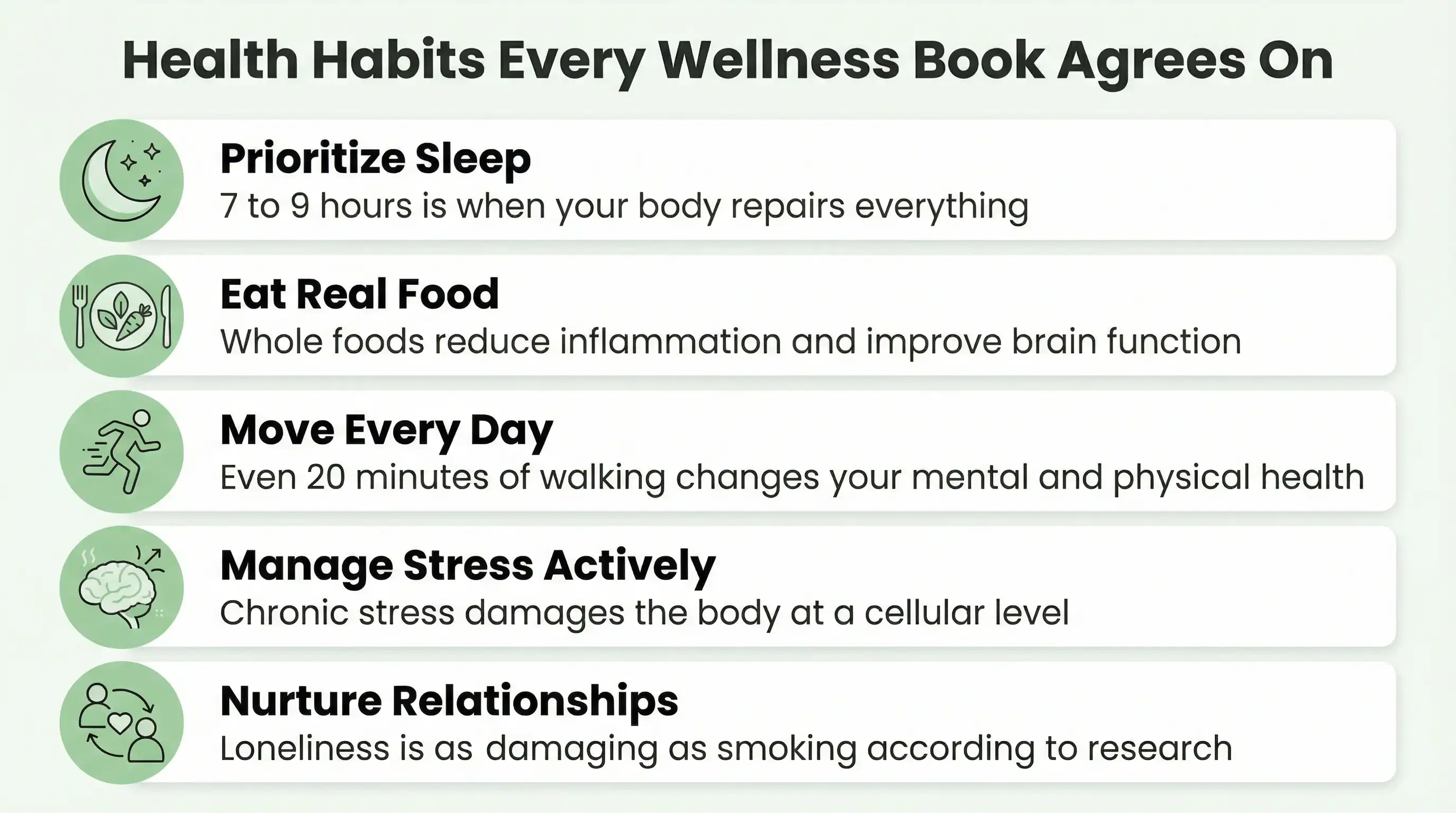
Quality health book publishing services play a critical role in helping the books grounded in real science reach the readers who need them, rather than leaving the field to books that make promises the science does not support. One of the most valuable things a reader can develop is the ability to distinguish between books grounded in rigorous evidence and books that offer compelling-sounding advice without adequate support. The habits below represent the areas where the scientific consensus is strongest, the things that research-backed health books consistently agree on.
Sleep is the Foundation of Everything Else
Matthew Walker’s Why We Sleep makes the case more compellingly than any book before it: sleep is not a passive state. It is when the brain consolidates memories, the body repairs tissue, the immune system is recalibrated, and the hormonal systems that regulate hunger, stress, and mood are reset. Chronic sleep deprivation, defined as anything under seven hours consistently, is associated with increased risk of virtually every major disease. No other single health intervention has as broad and as well-documented an effect as adequate sleep.
What You Eat Affects Far More Than Your Weight
The science of nutrition has been complicated by decades of conflicting advice, but on certain points, the research is now remarkably consistent. Whole foods, abundant plants, minimal ultra-processed food, and adequate fiber to support the gut microbiome form the foundation that virtually every evidence-based nutrition book endorses. How Not to Die by Michael Greger presents the evidence for the relationship between diet and the leading causes of death in America with a clarity and a specificity that makes the case more powerfully than any general advice could.
Movement Is Medicine, Even in Small Doses
The research on exercise and health is among the most consistent in all of medicine. Regular physical activity reduces the risk of cardiovascular disease, certain cancers, type 2 diabetes, depression, anxiety, and cognitive decline. It also extends healthspan, the period of life in which a person remains healthy and functional, more reliably than almost any pharmaceutical intervention. Peter Attia’s Outlive, one of the most comprehensive books on longevity science published in recent years, makes the case that exercise is the single most important investment a person can make in their long-term health.
Stress Management Is a Health Practice, Not a Luxury
The science of stress has revealed something that would have seemed counterintuitive to an earlier era of medicine: chronic psychological stress causes measurable physical damage at the cellular level. It accelerates the shortening of telomeres, the protective caps on chromosomes that are associated with biological aging. It suppresses immune function. It disrupts sleep, digestion, and the hormonal systems that regulate mood and appetite. Managing stress actively is not a self-indulgence, it is a physiological necessity, and books like The Stress-Proof Brain by Melanie Greenberg present the evidence and the practical tools for doing it with scientific rigor.
The Health and Wellness Books That Genuinely Changed How People Live
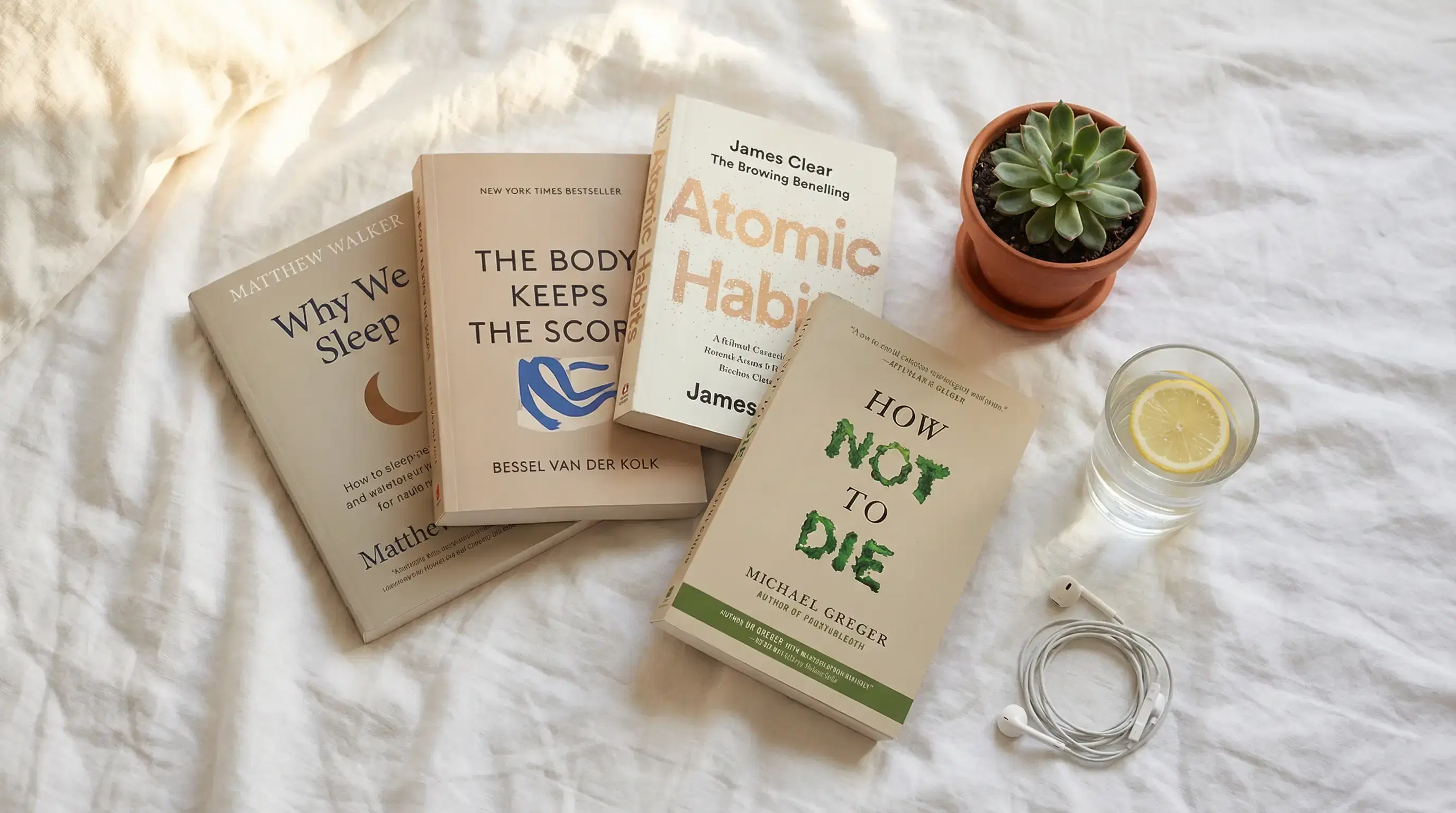
The books below are not simply well-reviewed or widely recommended
They are books that have produced measurable real-world behavior change in their readers, books that people credit with specific improvements in their sleep, their diet, their fitness, their mental health, and their overall relationship with their own bodies.
Why We Sleep by Matthew Walker
The most important health book of the last decade. Walker, a neuroscientist and sleep researcher at UC Berkeley, presents the science of sleep with a clarity and a comprehensiveness that has made this one of the most impactful popular science books ever published. Readers consistently report that it permanently changed their relationship with sleep, not because it told them sleep is important (everyone knows that) but because it explained exactly what sleep does and what sleep deprivation costs at a level of biological detail that made the consequences feel real and immediate. If you read only one health book in your life, make it this one.
The Body Keeps the Score by Bessel van der Kolk
One of the most widely read mental health books ever published, van der Kolk’s exploration of how trauma is stored in the body and how it can be healed has changed how millions of readers understand their own histories and their own nervous systems. It is a book that has helped readers who struggled for years to understand their own responses, to stress, to relationships, to their own bodies, finally feel understood. The combination of rigorous science and deep compassion makes it unique in the health literature.
Atomic Habits by James Clear
While Atomic Habits is often categorized as a business book, its most widespread real-world application is in health behavior change. Clear’s framework for building good habits and breaking bad ones, based on making the desired behavior obvious, attractive, easy, and satisfying, is the most practical and most widely implemented behavior change system available. For readers who know what healthy habits they want to build but struggle to make them stick, this book provides the most reliable toolkit available.
How Not to Die by Michael Greger
A comprehensive review of the scientific evidence on diet and the fifteen leading causes of death in America, written by a physician and researcher who has spent his career synthesizing nutrition research. Greger’s central argument, that most chronic disease is preventable and that diet is the most powerful tool available for prevention, is supported by an extraordinary volume of research, presented in a way that is both scientifically credible and genuinely readable.
Outlive: The Science and Art of Longevity by Peter Attia
The most comprehensive and the most rigorous book on longevity science available for general readers. Attia, a physician who has spent years researching the science of how to live longer and healthier, argues that the goal of medicine should not just be extending lifespan but extending healthspan: the period of life in which a person remains fully functional and vital. His frameworks for exercise, nutrition, sleep, and emotional health are evidence-based, practical, and genuinely transformative.
Gut: The Inside Story of Our Body’s Most Under-Rated Organ by Giulia Enders
A delightful, funny, and genuinely enlightening book about the digestive system and the gut microbiome, written by a medical researcher who manages to be rigorous and entertaining simultaneously. Enders makes the case that the gut is the most sophisticated and the most underappreciated system in the human body, and that the trillions of microorganisms that live in it influence virtually every aspect of health, from immune function to mood. A book that has given millions of readers a completely new appreciation for the complexity of the body they live in.
The Telomere Effect by Elizabeth Blackburn and Elissa Epel
Written by a Nobel Prize-winning scientist and a health psychologist, this book explains the biology of cellular aging through the lens of telomeres, the protective caps on chromosomes that shorten over time and with stress, and that can be lengthened through specific lifestyle practices. It is one of the most scientifically rigorous books about aging ever written for a general audience, and it makes a compelling case that we have far more influence over how we age than most people realize.
Lost Connections by Johann Hari
A deeply researched and deeply personal investigation into the real causes of depression and anxiety, and why the dominant treatment model, which focuses almost exclusively on brain chemistry, may be missing most of the picture. Hari’s argument that depression and anxiety are often responses to meaningful problems in how people are living, disconnection from other people, from meaningful work, from nature, is supported by a wide range of research and has helped millions of readers understand their own experiences in a new way.
Why Health and Wellness Books Work When Everything Else Feels Overwhelming
One of the paradoxes of health in the modern era is that there has never been more information available and many people have never felt more confused about what to actually do. Social media delivers a constant stream of contradictory advice. Every week brings a new study that seems to contradict last week’s. The wellness industry produces products and programs that make extraordinary promises with varying degrees of scientific support. In this environment, a well-written, rigorously researched health book is an extraordinary resource.
Reading about health at your own pace changes how you absorb the information. Unlike a doctor’s appointment, where you are often receiving information under stress in a short window of time, a health book allows you to read at the pace that works for you, to stop and think about what you have read, to reread the sections that feel most relevant, to sit with an idea until you genuinely understand it rather than rushing to the next point.
The best health books also understand that information alone does not change behavior, story does. When a health author embeds their scientific content in personal narrative, their own health journey, the patients they have worked with, the research that surprised them, the advice becomes human in a way that abstract information rarely achieves. Readers do not just understand what the author is recommending. They feel why it matters. And that emotional engagement is the bridge between knowing what to do and actually doing it.
Perhaps most importantly, the best wellness books meet readers exactly where they are without judgment. They do not assume that their readers are lazy or ignorant or in denial. They assume that their readers are intelligent people who have been given incomplete or confusing information and are doing their best with what they have. That fundamental respect for the reader is what separates books that motivate from books that make people feel guilty, and it is what makes a health book actually change lives rather than simply inform them.
What Health and Wellness Readers Are Focused on in 2026
The health and wellness book category in 2026 reflects a generation of readers who are taking their health more seriously than any previous generation, and the appetite for health and wellness book publishing services has grown accordingly, and who are looking for depth, rigor, and personalization rather than the generic one-size-fits-all advice that dominated wellness publishing for decades.
Longevity and aging science has become one of the most searched and most read topics in health publishing, driven partly by the explosion of research in this area and partly by the growing awareness that how long a person lives is far less important than how well they live. Books that explain the biology of aging, and more importantly the evidence-based interventions that can slow it, are reaching enormous audiences. Peter Attia’s Outlive has become one of the most discussed health books of the decade precisely because it treats longevity as a serious science rather than a wellness trend.
Mental health books are the fastest growing category in all of wellness publishing. The destigmatization of mental health conversations that has accelerated through the 2020s has created a massive audience for books that explain psychological conditions, anxiety, depression, ADHD, trauma, grief, with scientific rigor and without condescension. Readers want to understand their mental health the way they understand their physical health, as something that can be actively supported, managed, and improved.
Gut health and personalized nutrition are transforming how readers think about diet and digestive health. The science of the microbiome, the trillions of bacteria that live in the gut and influence immune function, mood, cognition, and metabolic health, has produced some of the most exciting health research of the past decade, and the books that translate this research for general readers are among the most widely read in the wellness category right now.
How to Choose the Right Health Book for Where You Are Right Now
The most important principle for choosing a health book is to match it to the specific aspect of your health that you most want to understand and improve right now. A book about nutrition is not useful if your most pressing health challenge is sleep. A book about longevity is more relevant if you are thinking about the long term than if you are trying to manage acute stress. The right book at the right moment for the right challenge is the formula for maximum impact.
If sleep is a problem, if you struggle to get enough, feel unrefreshed by what you get, or simply do not prioritize it the way you know you should, start with Why We Sleep by Matthew Walker. It is the book most reliably reported by readers to have produced immediate and lasting change in their sleep habits.
If you are struggling with the emotional side of health, anxiety, depression, unresolved stress, or the sense that past experiences are still affecting your present, start with The Body Keeps the Score by Bessel van der Kolk. It is the book that most consistently helps readers feel that their experiences are understood and that healing is genuinely possible.
If you want a comprehensive framework for thinking about your long-term health, the kind of book that will shift your entire approach rather than addressing one specific issue, Outlive by Peter Attia is the most thorough and most rigorous guide to preventive health and longevity currently available. And if the challenge is making healthy habits stick rather than understanding what they should be, Atomic Habits by James Clear is the most practical toolkit available for any behavior change challenge.
How Best Selling Publisher Publishes Health and Wellness Books
Health and wellness books carry a particular responsibility that sets them apart from most other categories in publishing, because the advice they contain has direct consequences for real people’s real health. Getting it right matters in a way that few other book categories demand.
Our approach to health and wellness book publishing services begins with care and accuracy. We work with health authors to ensure that their claims are supported by the evidence they cite, that the nuance and limitations of health research are represented fairly, and that the advice the book contains is both safe and genuinely useful. Health readers are sophisticated and increasingly well-informed, they will notice when a health book overclaims or misrepresents the evidence, and the credibility of an author’s entire body of work can be undermined by a single chapter that does not meet this standard.
Cover design for health and wellness titles requires building trust immediately, because the reader’s first decision is whether to trust the author enough to take their advice. A health book cover that looks authoritative, professional, and aligned with the specific wellness community it is speaking to converts browsers into buyers. One that looks generic or unpolished loses potential readers before they have read a word.
We handle the complete publishing journey for health and wellness authors, from manuscript editing and fact-checking support to genre-specific cover design, Amazon KDP setup, keyword optimization for the health category, and marketing strategies that reach the wellness communities where health readers actually discover new books. Authors work with Best Selling Publisher with their work. We would love to help your health knowledge reach the people who need it.
Conclusion
Taking your health seriously starts with understanding it, and understanding it starts with finding the right book. The knowledge is available. The research has been done. The scientists and doctors and researchers who have spent their careers studying how the human body works and what it needs to thrive have written books that make that knowledge accessible to anyone willing to read. The gap between what most people know about their own health and what is available to know has never been smaller.
The unique value of a great health book is that it keeps giving long after the final page. The understanding it creates changes how you make decisions, not just immediately after reading, but for years afterward. The framework it provides for thinking about your body and your wellbeing becomes part of how you see every meal, every night of sleep, every stressful day. That compounding return on a few hours of reading is extraordinary, and it is available to every person willing to invest in it.
FAQs
Working with a professional publishing partner who offers dedicated health book publishing services and understands the specific requirements of health and wellness publishing is the most effective route for most health authors. Best Selling Publisher offers complete health and wellness book publishing services, from manuscript editing and fact-checking support to genre-specific cover design that builds immediate reader trust, Amazon KDP publishing, keyword optimization for the health category, and targeted marketing that reaches wellness communities. Contact our team to learn how we can help your health knowledge reach the readers whose lives it could change.
Most health and wellness books fall between 60,000 and 90,000 words. Books that synthesize a significant body of research, like Why We Sleep or The Body Keeps the Score, tend toward the longer end of this range, while books focused on practical habit guidance are often tighter and more concise. The appropriate length is determined by the depth of the subject and the amount of evidence that needs to be presented to support the book’s claims. Health readers are discerning, they expect sufficient evidence to justify the recommendations a health author makes.
Health books focus primarily on physical and mental wellbeing, the biology and science of the body, evidence-based approaches to preventing and treating illness, and specific practices for improving physical and psychological health. Self-help books have a broader scope that often includes personal development, productivity, relationships, and life philosophy more generally. The two categories overlap significantly, and many books contain elements of both. The distinction is less important than finding books that address what you most need right now.
Yes, but the mechanism matters. Health books that explain the why behind the what, that help readers understand the biological consequences of their habits at a level of detail that makes those consequences feel real, consistently produce more lasting behavior change than books that simply prescribe behaviors without explanation. The research on health behavior change consistently shows that understanding is the bridge between intention and action: people who understand why a habit matters are significantly more likely to maintain it than people who have only been told that they should.
In 2026, the wellness topics generating the most reader interest and the strongest book sales are longevity and aging science, mental health and trauma, sleep optimization, gut health and the microbiome, hormonal health, and mindfulness and stress management. Books that address these topics with scientific rigor, rather than trend-based advice, are consistently outperforming those that promise quick results without adequate evidence.