
Why Authors Need a Website to Sell More Books and Build Authority
Most authors pour months, sometimes years, into writing a book. Then they publish it, set up an Amazon page, maybe create an Instagram account, and wait. What they have built at that point is a presence on platforms owned entirely by other companies, platforms that can change their algorithms tomorrow, reduce organic reach next week, or shut down an account with no warning. Every follower, every review, every piece of visibility lives on borrowed land.
An author website changes that equation completely. It is the one place on the internet where the author owns the audience, controls the narrative, and builds a sales channel that no platform update can take away. Authors who understand this early build careers that compound over time. Those who skip it spend years working harder than they need to for results that disappear whenever a platform decides to change the rules.
Why Your Author Website Matters More Than You Think
Your Social Media Following Is Not Your Audience
There is a meaningful difference between a following and an audience. A following is a number on a platform that can vanish for any number of reasons, an algorithm change, an account flag, a platform exodus, a shift in what content gets shown. An audience is a group of people you can reach directly, regardless of what any platform decides to do.
Authors who have built their entire author online presence on social media have watched that work evaporate when platforms pivoted. Instagram reduced organic reach for business accounts. Twitter became something most readers no longer trust. TikTok faces ongoing regulatory uncertainty. None of those shifts affected authors who had an email list built through their own book author website, because their audience was never renting space on someone else's platform.
Amazon and Goodreads Are Not Enough
Amazon is where a lot of books get sold. It is not where author relationships get built. A product page gives you a cover, a description, some reviews, and a buy button. There is no space to tell your story, show readers who you are, explain why this book exists, or give them a reason to follow you beyond this purchase. Goodreads is useful for discovery, but it is a review platform, not a marketing platform.
Neither Amazon nor Goodreads captures an email address. Neither lets you run a promotion on your own terms. Neither lets you communicate with your readers when a new book comes out without paying for the privilege or hoping the algorithm surfaces your content. A professional author website does all of these things, and it does them in a space the author controls completely.
Readers, Journalists, and Publishers All Google You
Before anyone buys a book they discovered on social media, before a podcast host reaches out about an interview, before a literary agent considers a query, before a journalist decides whether to write about an author, they search the name. What comes up in those first few results is the first impression, and first impressions in publishing carry real weight.
An author with a polished, professional website signals that they take their writing career seriously. An author whose only search result is an Amazon page, or worse, nothing at all, signals the opposite. The author brand building that happens through a well-built website is not just about marketing books. It is about being taken seriously in every professional conversation that follows publication.
What a Professional Author Website Actually Does for Your Career
Builds Discoverability Through Search
A well-structured author website earns search traffic over time. When someone searches for your name, your book title, or a genre-related question you have written about, a well-optimized site appears in the results. That visibility compounds. A blog post written today can bring new readers to your book page for years without any additional effort or ad spend.
Social media posts, by contrast, have a lifespan measured in hours. A tweet, a reel, or a Facebook post generates engagement for a day or two and then disappears into the feed. Owned content on a website does the opposite. It builds search authority gradually and continues generating traffic long after it was published.
Converts Visitors Into Readers and Buyers
Getting someone to a website is one thing. Turning that visit into a sale or a subscriber is something a well-designed site does systematically. Clear calls to action, strategically placed email signup forms, book pages that sell rather than just display, and a coherent flow through the site all work together to move a casual visitor toward becoming a committed reader.
This is something no social profile can do. A social page shows content. A book marketing website runs a sales funnel. Those are fundamentally different things, and the authors who understand the difference tend to sell books online more effectively than those who do not.
Establishes Authority in Your Genre or Niche
For non-fiction authors especially, the website is where expertise gets demonstrated rather than just claimed. A business author with a blog full of sharp, well-researched articles is demonstrably more credible than one whose only web presence is a single Amazon page. For fiction authors, a website that communicates genre clearly, shows a coherent body of work, and presents the author's voice consistently signals that this is a writer worth following, not just a book worth trying.
That author brand building effect is difficult to quantify in the short term and very difficult to ignore once it starts compounding. Readers who trust an author buy every book. Readers who discover a single book and have no way to connect with the author rarely become career readers.
Supports Every Other Marketing Channel
Every marketing activity an author does, running ads, appearing on podcasts, posting on social media, getting press coverage, sending an email newsletter, performs better when it points to a high-quality website rather than a generic retailer page. Ads that lead to a professional author site with a clear purchase path convert at higher rates than ads pointing directly to Amazon. Podcast appearances that mention a website generate subscribers. Press coverage that links to a polished site builds lasting authority.
The website is not just one channel in the mix. It is the hub that makes every other channel more effective.
What Readers and Publishers Actually Look for When They Search You Online
What Readers Want to Find
When a reader who has just finished your book searches your name, they are almost always looking for one of three things: more books to read, a way to connect with you or stay updated on what you are working on, and a sense of who you are beyond the words on the page. They want to know whether they have found an author whose work they can follow for years, or whether this was a one-off discovery.
A website that shows a catalog of titles, communicates the author's personality, and gives readers a simple way to subscribe for updates answers all three questions immediately. A site that has none of those things, or does not exist at all, sends readers back to the search results to find something else.
What Agents, Publishers, and Media Look For
Literary agents and publishers look at an author's platform as part of their assessment of a submission. Platform does not mean follower count. It means demonstrated ability to reach and engage an audience. An author with a well-maintained website, an active blog, and a growing email list has demonstrated that audience-building capacity in a way that a social following alone does not.
Journalists and podcast hosts look for ease. A press page with a high-resolution author photo, a pre-written bio in multiple lengths, media clips, and a simple contact form makes it easy to feature you. The harder you make it for the media to cover your work, the less coverage you get. A professional author website removes that friction entirely.
What Happens When They Cannot Find You
The outcome when an author has no meaningful web presence is not neutral. It is actively negative. The reader who cannot find more of your work follows a different author who gave them somewhere to go. The agent who cannot assess your platform moves on to the next query. The podcast host who cannot find a press page reaches out to someone else. The journalist who finds nothing professionally presented writes about someone who makes their job easier.
These are not hypothetical scenarios. They happen constantly to authors who have invested heavily in their writing and almost nothing in their author online presence. The gap between what those authors could be achieving and what they are achieving is, in many cases, almost entirely a website problem.
What Every Author Website Needs (And How to Get It Right)
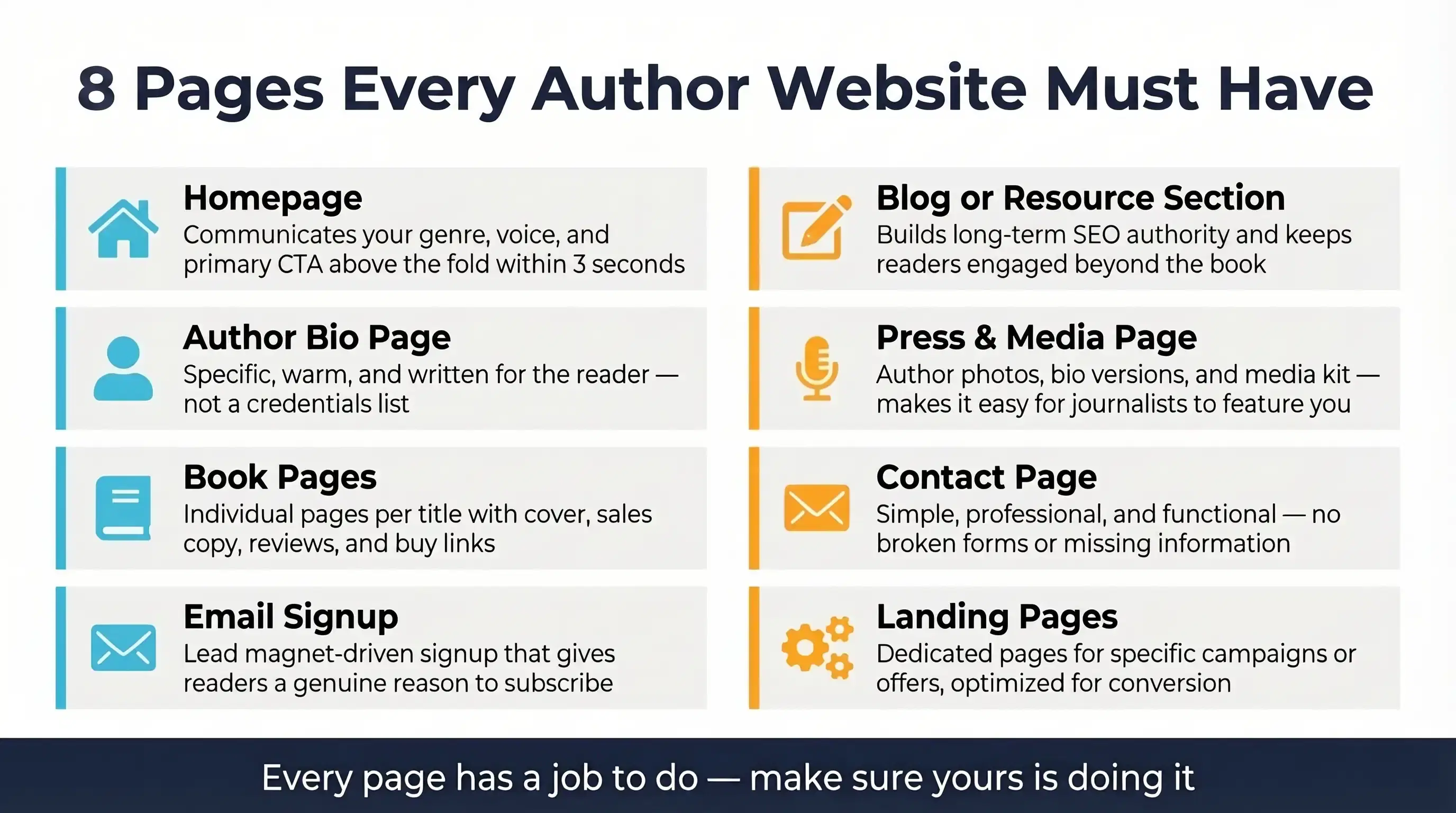
A well-built author website is more than a digital business card. Each page has a specific job to do, and when those pages work together, the site becomes an active sales and relationship-building tool. Here is what every author website essentials checklist should include:
- Homepage that communicates genre, author identity, and a clear next step above the fold
- Author bio that reads like a person wrote it, not a credentials list
- Individual book pages with cover, sales copy, reviews, and buy links
- Email signup with a lead magnet that gives readers a genuine reason to subscribe
- Blog or resource section that builds search authority and reader trust over time
- Press and media page with photos, bio versions, and easy contact for journalists
- Contact page that is simple, professional, and actually functional
- Mobile-optimized, fast-loading design that works across every device
Homepage That Communicates Who You Are in Seconds
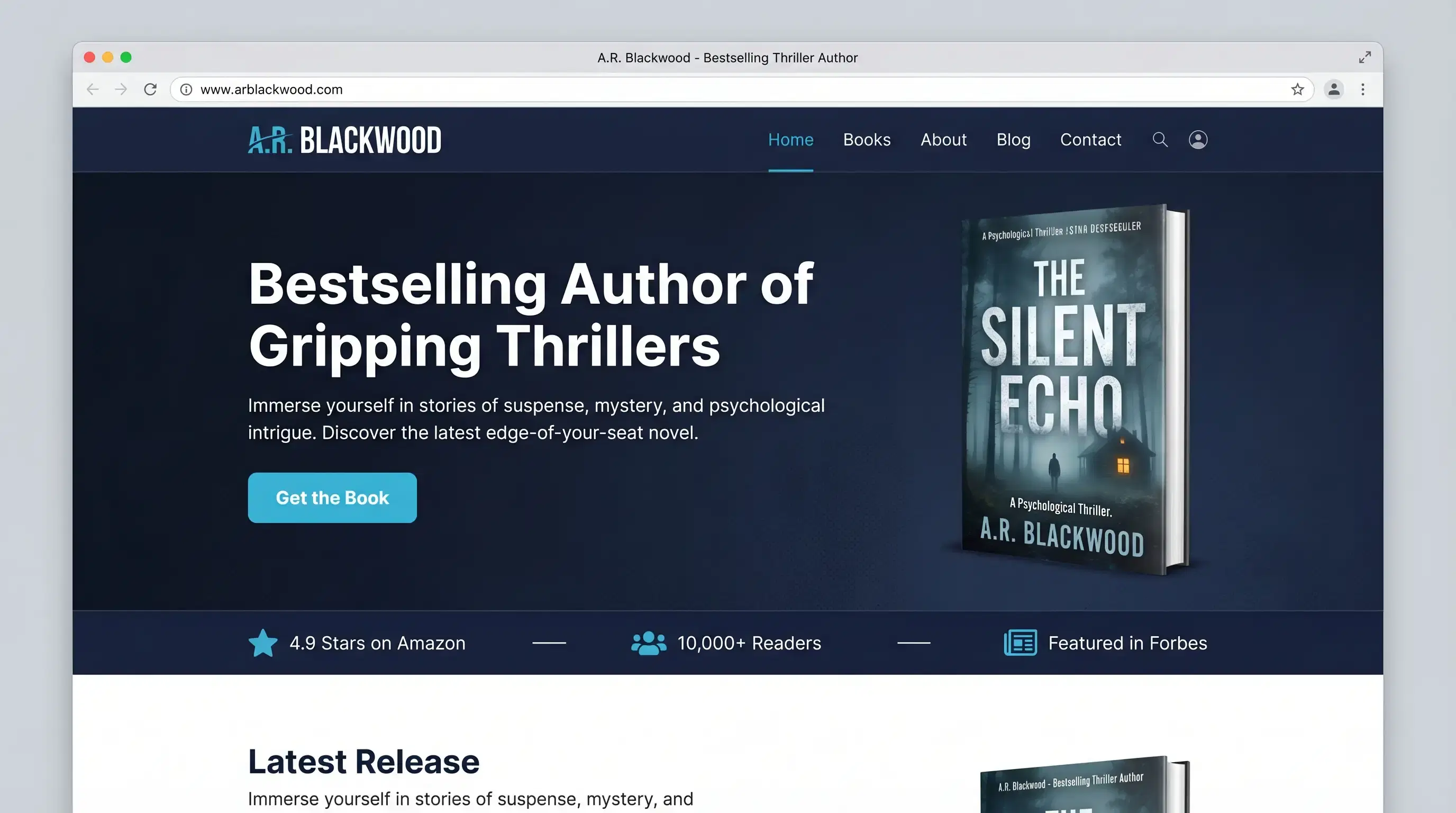
A homepage has one job: tell a visitor who you are, what you write, and what to do next before they decide to leave. Research on web behavior consistently shows that visitors make that judgment within the first ten seconds or so - Nielsen Norman Group's work on page duration finds most visitors leave inside ten to twenty seconds, with the sharpest judgement at the start of that window. Everything above the fold on the homepage, the content visible before any scrolling, needs to do that work.
A strong homepage for a book author website includes a clear headline that communicates genre or expertise, at least one book cover prominently displayed, a brief statement about who the author is and what they write, and a single primary call to action, typically to buy a book or join the email list. Cluttered homepages with competing messages consistently underperform clean, focused ones.
Author Bio That Actually Tells Us Something
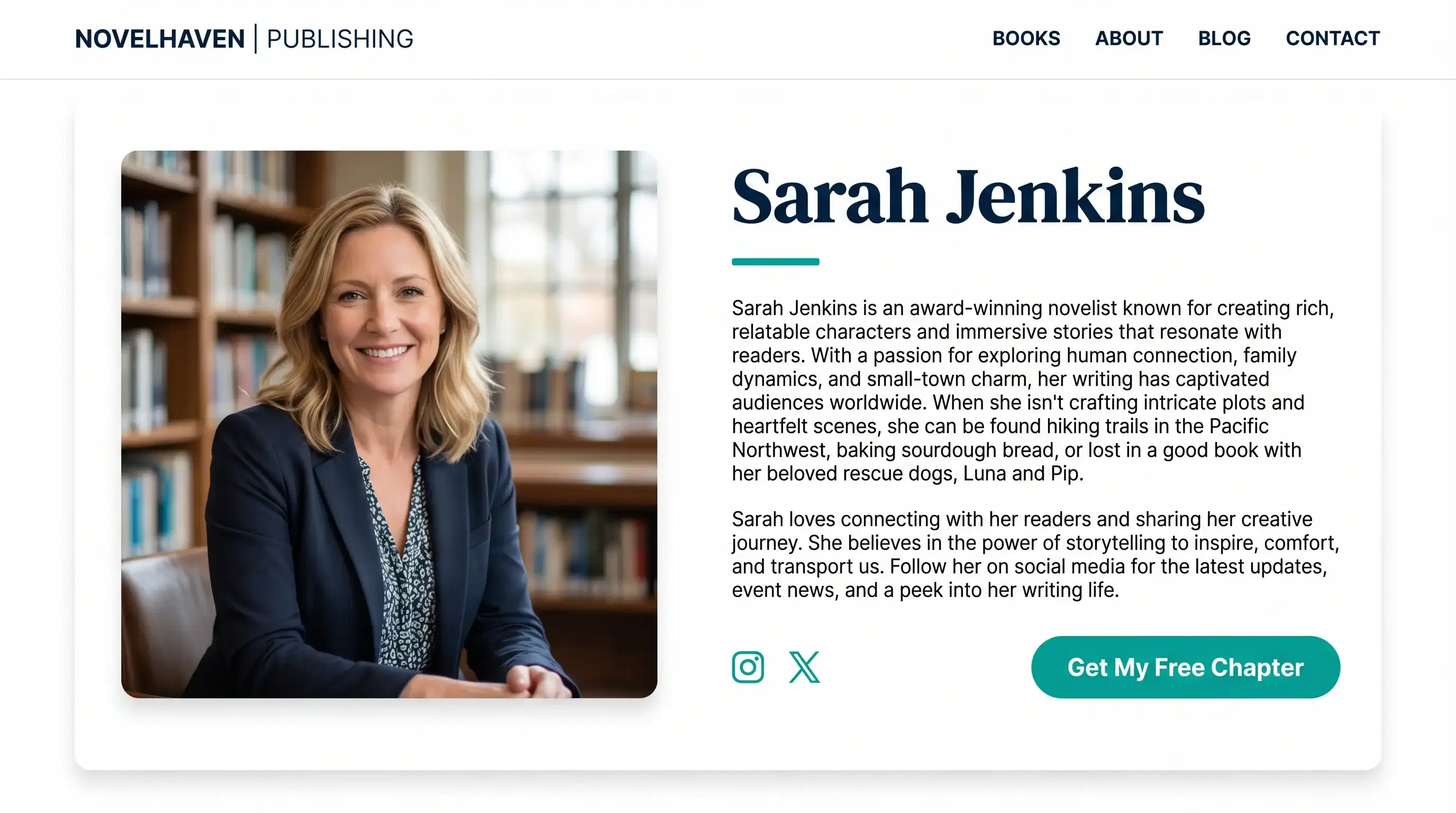
Most author bios are either too sparse to be interesting or too stuffed with credentials to feel human. A good bio is specific. It tells readers something real about the author as a person, not just as a publishing entity. It communicates voice. It makes the reader feel like they are meeting someone worth knowing.
The difference between a forgettable bio and one that converts is specificity. Not "Jane Smith has been writing fiction for fifteen years" but rather who Jane Smith is, why she writes what she writes, and what connects her work to her readers' lives. That specificity is what turns a bio from a formality into a relationship-starter.
Book Page (or Pages) That Sell
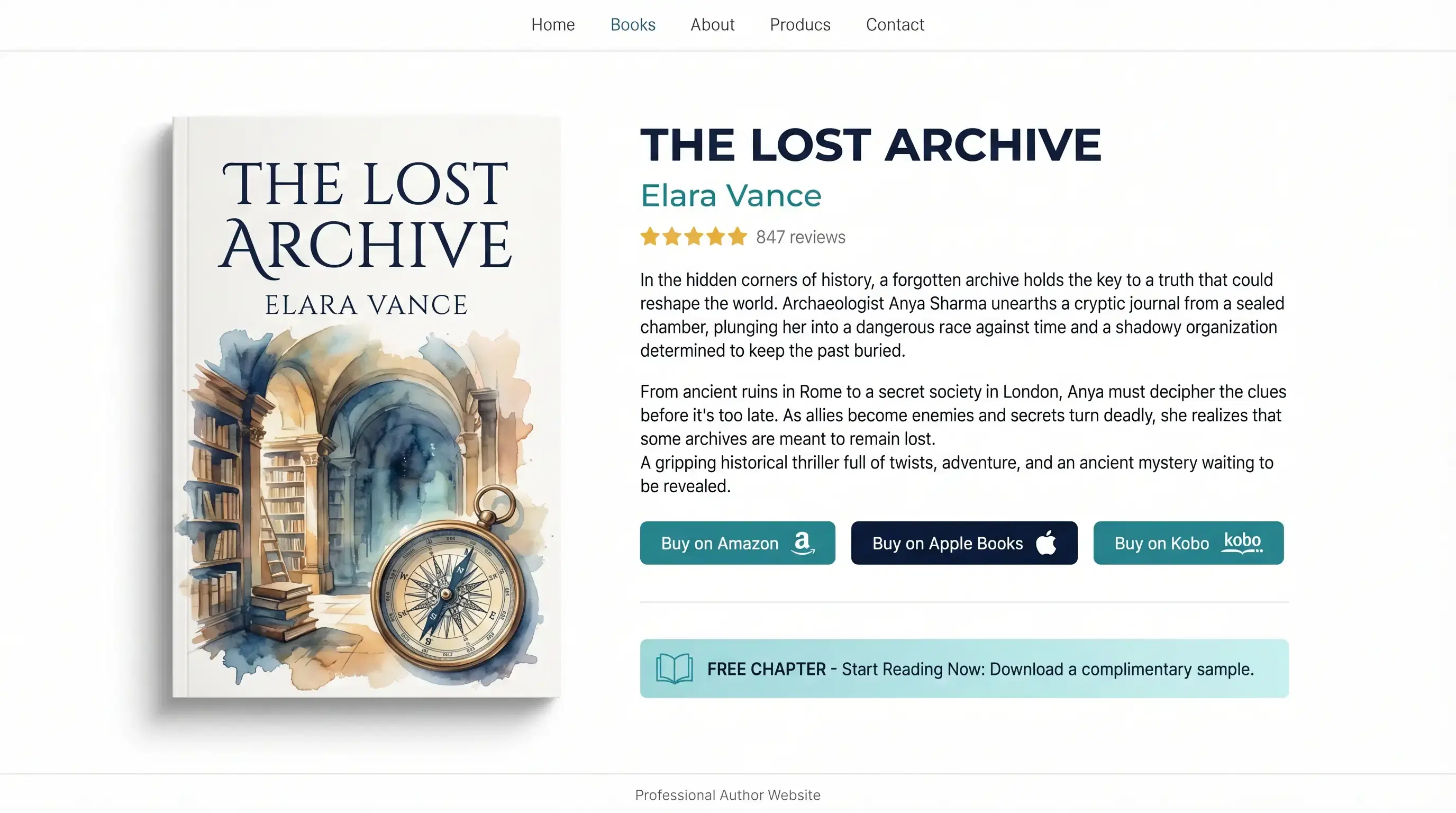
Each book deserves its own dedicated page, not a shared catalog listing. A book page that converts includes the full cover image, a description that sells the experience rather than just summarizing the plot, reader reviews and testimonials, buy links to multiple retailers, and ideally a lead magnet or reader bonus tied to the book.
What makes a book page fall flat is almost always the same thing: it describes the book instead of selling it. The description should make a reader feel something and want to know what happens, not just know what the book is about. The author website's essential conversation always starts here, because this is where the actual transaction happens.
Email Signup That Gives Readers a Reason to Subscribe
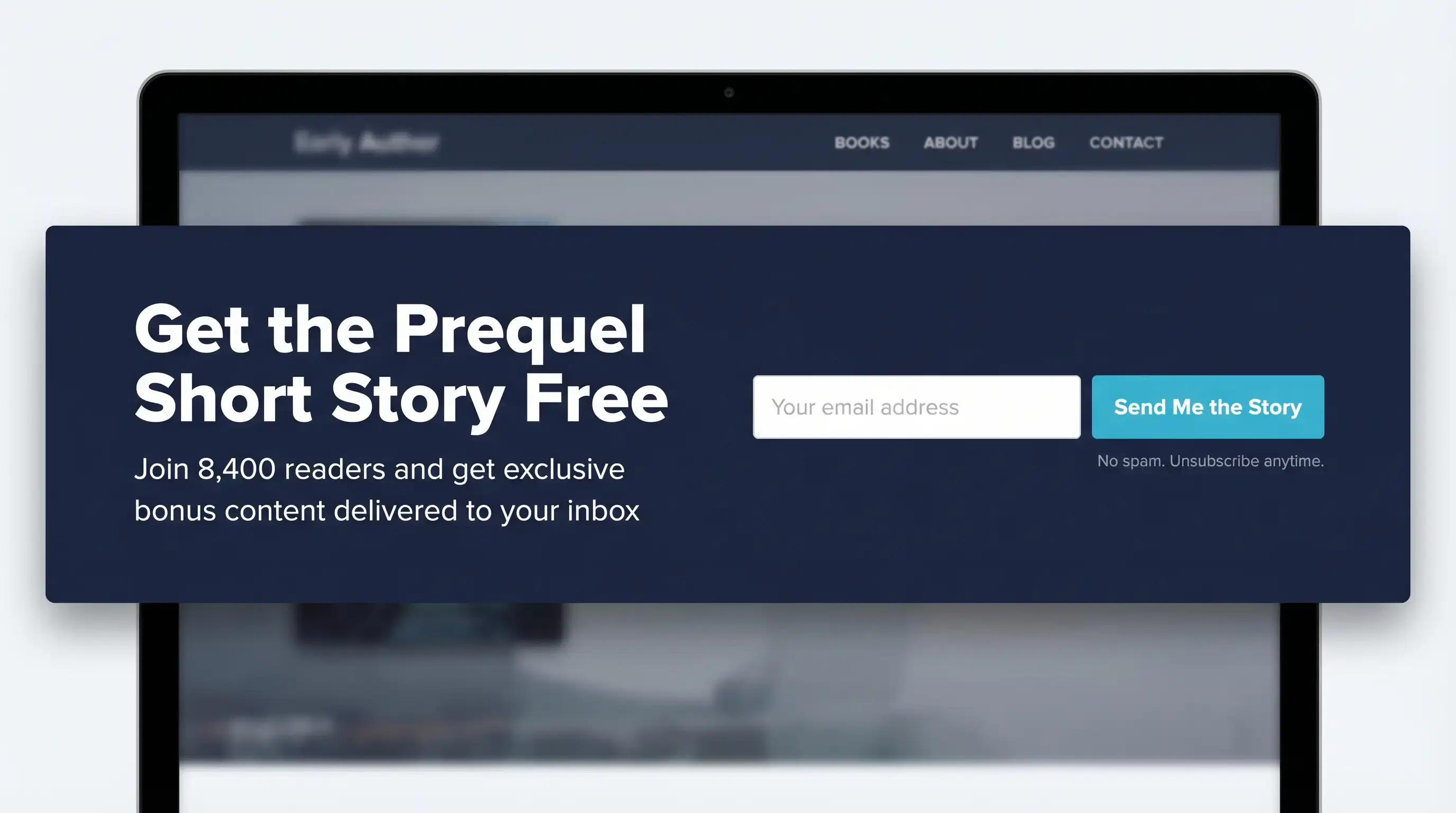
An email list is the most valuable thing an author can build through their website, and it only grows if readers have a genuine reason to hand over their address. A vague "subscribe to my newsletter" prompt almost never works. A specific, valuable offer does.
For fiction authors, the most effective lead magnets are bonus content directly tied to the book: a prequel short story, deleted scenes, an extended epilogue, a map, a character guide. For non-fiction authors, a practical resource that solves the same problem the book addresses consistently outperforms generic newsletter signup asks. The author email list built through this kind of targeted offer is far more engaged than one built through passive signups.
Blog or Resource Section That Builds SEO and Trust
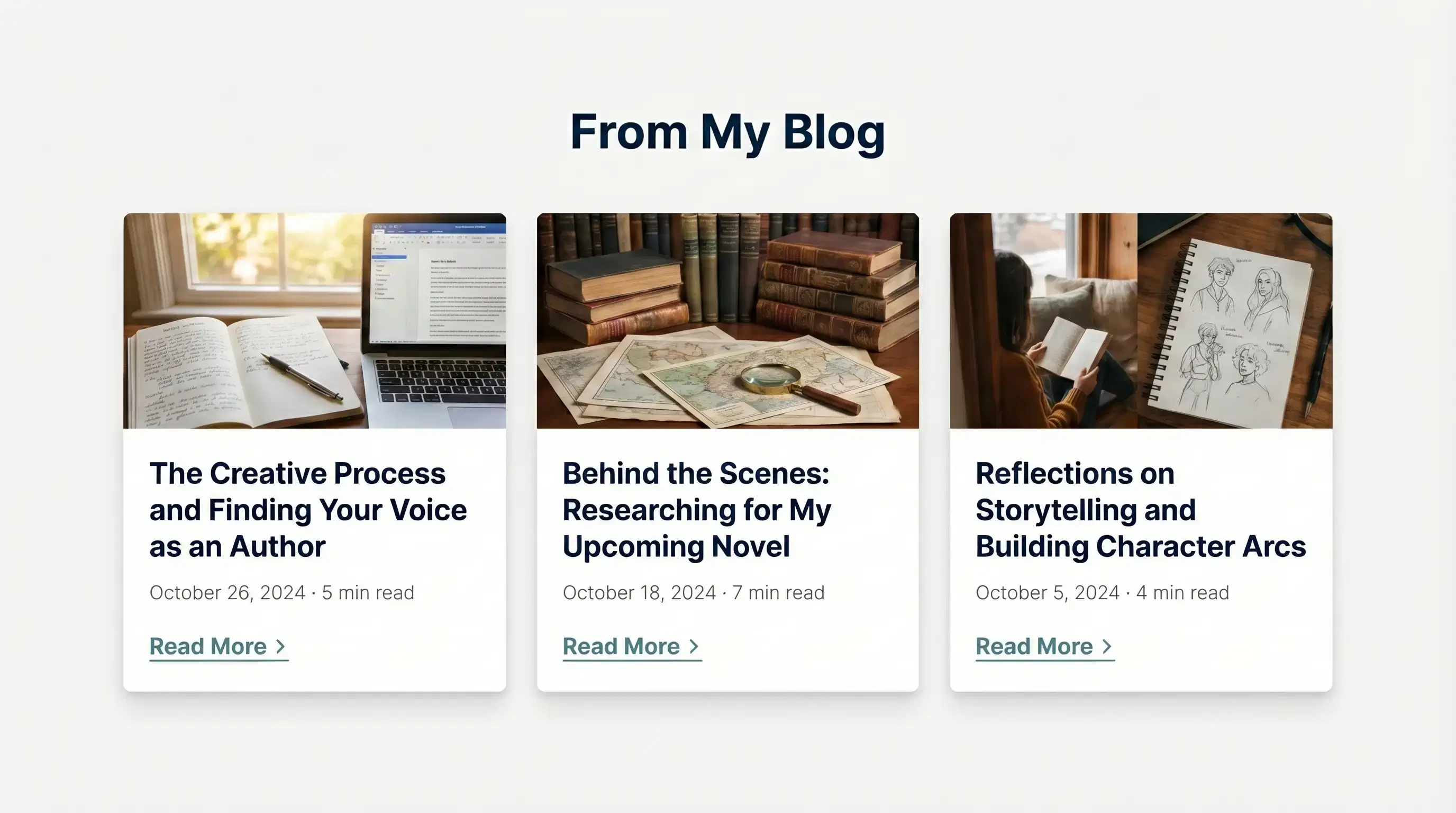
A consistent author blog gives search engines a reason to return to the site regularly and gives readers a reason to stay longer when they arrive. For non-fiction authors, the blog is a natural extension of the book's subject matter. For fiction authors, it can cover the writing process, the research behind the world, reader questions, or anything that communicates the author's personality and deepens the reader relationship.
The frequency matters less than the consistency. An author who publishes one solid, well-written post per month builds more long-term search authority than one who publishes ten rushed posts in January and nothing for the rest of the year.
Press and Media Page for Credibility
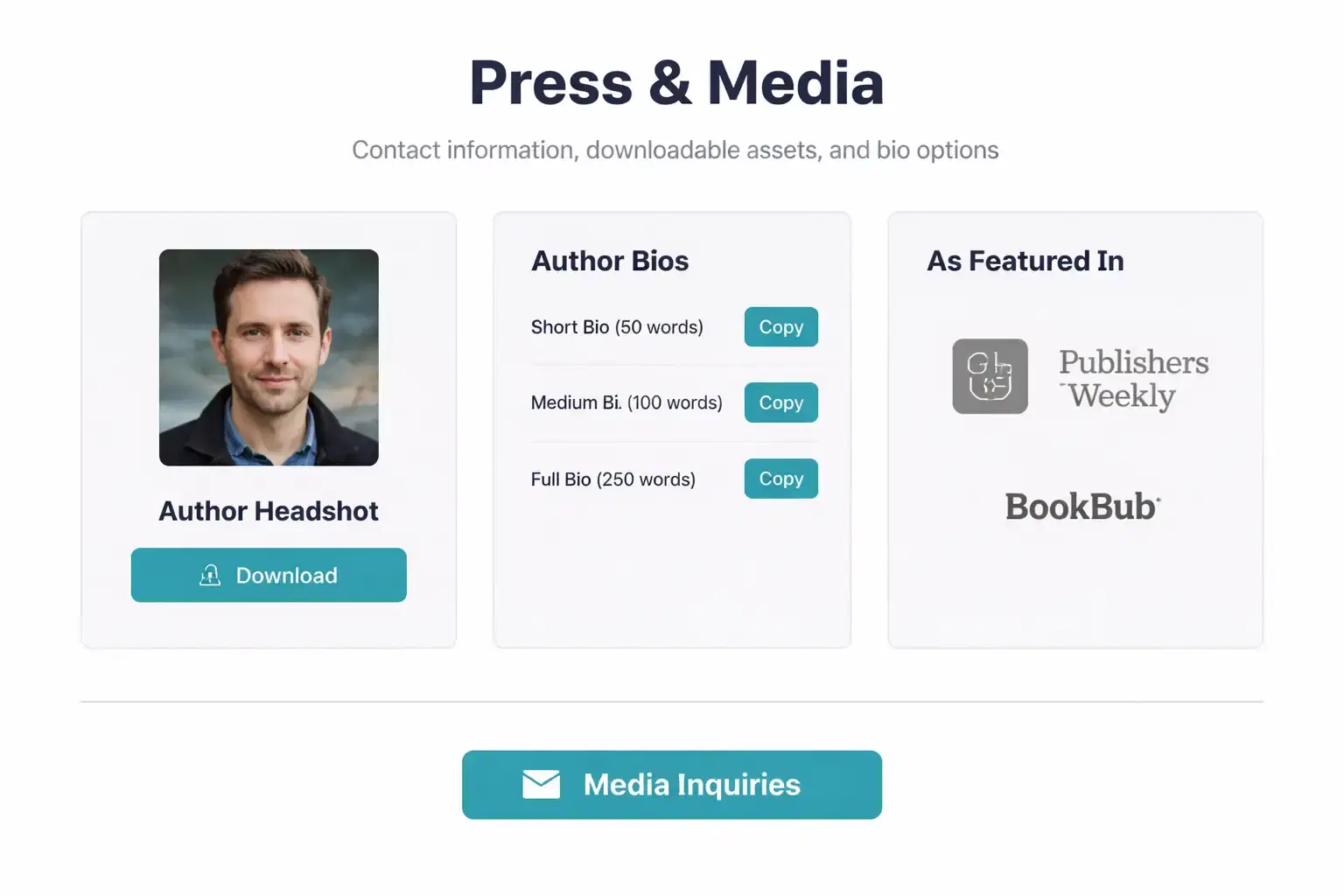
A press page is often the most overlooked element on an author website, and one of the most important for career growth beyond book sales. Journalists, podcast hosts, event organizers, and conference speakers all conduct the same first step when considering whether to feature an author: they look for a press page.
A good press page includes a high-resolution author photo available for download, the author bio in short, medium, and long versions, any media coverage or interview clips, key talking points or topic areas the author is available to speak on, and a direct contact method for media inquiries. Authors who have this page consistently get more coverage than those who do not, simply because they make the process easier for the people doing the feature.
Contact Page That Is Actually Easy to Use
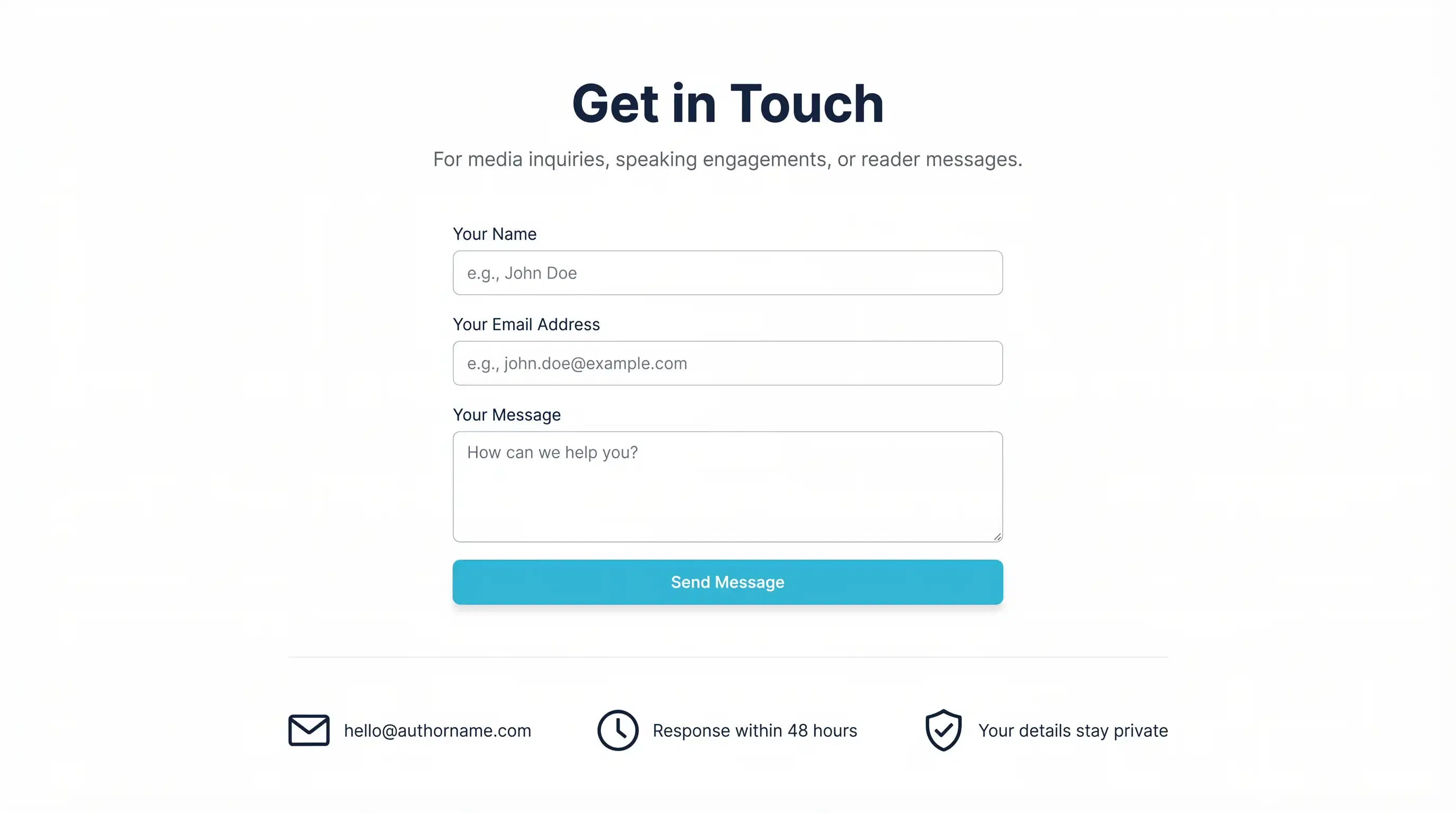
A contact page should be simple, professional, and functional. Readers, event organizers, media, and potential business partners all need to be able to reach the author without friction. A working contact form with a response time expectation, a professional email address, and clear guidance on what types of inquiries the author welcomes is all it takes.
What to avoid: contact pages with broken forms, no contact information at all, addresses that bounce, or social media profiles listed as the only way to get in touch. Any of these signals that contact is not actually welcome, which is the opposite of what an author trying to build a career wants to communicate.
Mobile Optimization and Page Speed
Most web traffic now comes from mobile - StatCounter put it at about 53% worldwide in mid-2026, or 54% counting tablets - devices. A website that loads slowly, has text that is too small to read on a phone, or has buttons that are too close together to tap accurately loses the majority of its visitors before they have seen anything meaningful. This is not a technical consideration that authors can deprioritize. It is a direct cost in sales and subscribers.
Page speed also affects search rankings. Google uses mobile performance as a ranking signal, which means a slow site does not just frustrate visitors, it actively reduces the organic traffic the site can generate. A professional website for authors built with mobile performance as a core requirement outperforms DIY sites on this metric almost universally.
How to Use Your Author Website to Sell More Books
Build and Grow Your Email List From Day One
The email list is the website's most important output. A subscriber who came through the website is significantly more likely to buy the next book than a social media follower, because they have demonstrated a level of interest that goes beyond a passive scroll. They gave their contact information. They wanted to stay connected.
Building that list starts on day one, not after the second or third book. An author who begins list building with their debut title and maintains it through subsequent releases builds an audience that grows with their catalog. By the time the third book launches, the email list is doing most of the heavy lifting on launch day, driving the early sales velocity that influences rankings and visibility on retail platforms.
Use Your Blog to Drive Organic Traffic to Your Book Pages
A blog post that ranks in Google brings readers to the site who then discover the author's books through internal links and sidebar placements. This is how an author blog becomes a sales tool rather than just a content archive. A non-fiction author who writes about topics adjacent to their book's subject matter consistently attracts readers who are already interested in exactly what the book covers. A fiction author who writes about genre, craft, or the world their books are set in attracts readers who are predisposed to enjoy the work.
Every blog post that earns a search ranking is a permanent door into the author's website. The more well-optimized posts a site has, the more of those doors exist, and the more consistently new readers find their way to the book pages.
Create a Reader Funnel That Works While You Write
A well-designed author website design automates the reader journey from first visit to committed buyer. A new visitor lands on a blog post through Google. They read it, find it useful or engaging, and see a relevant call to action prompting them to download a free chapter or bonus content. They sign up with their email. They receive a welcome sequence that introduces more of the author's work. By the time the author's next book launches, this reader already knows who they are and is primed to buy.
This funnel runs continuously in the background without the author doing anything after the initial setup. It is genuinely one of the most powerful advantages of owning a website rather than relying on social platforms, which have no equivalent mechanism.
Promote New Releases and Limited Offers Directly
A website gives authors the ability to run promotions entirely on their own terms. A launch week banner, a limited-time discount code, a pre-order incentive, a bundle offer for buying multiple books together, none of these require Amazon's permission or a paid advertising budget to execute. Authors who have an engaged email list and a website with clear promotional real estate can drive meaningful sales spikes with a single email and a dedicated landing page.
This kind of promotional flexibility is something retail platforms specifically do not offer. It is one of the clearest practical arguments for building and maintaining a book marketing website rather than treating the website as an afterthought.
The Biggest Mistakes Authors Make When Building Their Own Website
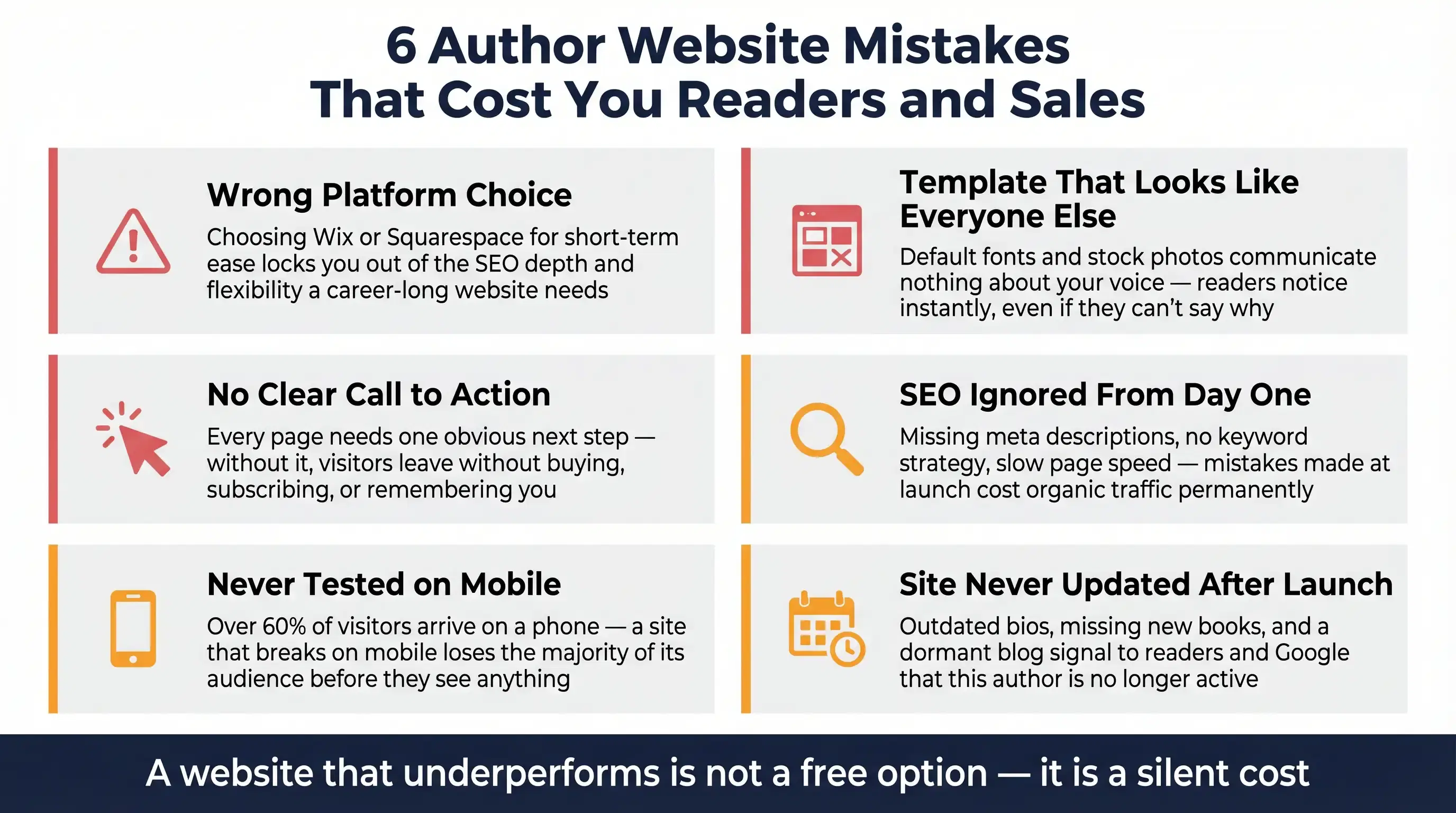
Choosing the Wrong Platform for Their Needs
Wix, Squarespace, and WordPress each serve different use cases, and authors often choose based on which one they have heard of rather than which one best serves book marketing. Wix and Squarespace are easy to start with but have real limitations when it comes to SEO depth, plugin flexibility, and the kind of customization a serious author website eventually requires. WordPress, while more technically demanding, gives authors the control and scalability that a career-long web presence needs.
The platform decision matters more at the beginning than it seems to. Migrating a site later is possible but expensive and disruptive. The how to build an author website conversation should always start with platform selection based on long-term goals, not just immediate ease of setup.
Building a Site That Looks Like a Template, Not a Brand
Default fonts, stock photography, and out-of-the-box color schemes communicate nothing distinctive about the author. They communicate that the author used the same theme as thousands of other websites. Readers who land on a site that could belong to anyone pick up on that immediately, even if they could not articulate why it feels generic.
A website that actually functions as author brand building uses typography, color, imagery, and layout choices that are specific to the author's voice and genre. Those choices are not decorative. They are the first signal of what kind of reading experience the author provides.
No Clear Call to Action on Any Page
The most common structural failure in DIY author websites is the absence of clear next steps on every page. A visitor who finishes reading a book description and sees no prompt to buy, subscribe, or explore more has been given permission to leave. Most of them do.
Every page on an author website should have one primary call to action that is obvious and easy to follow. Not multiple competing actions, not a vague invitation to get in touch, but a specific next step that moves the visitor in the direction the author wants them to go. This is basic conversion design, and it is almost universally missing from author websites built without professional guidance.
Ignoring SEO From the Start
An author website that is not optimized for search is effectively invisible to anyone who does not already know the author's name. Basic SEO mistakes, missing meta descriptions, unoptimized page titles, no keyword strategy, slow page speed, no internal linking structure, are easy to make and expensive to fix retroactively.
The authors who get consistent organic traffic to their author website are almost always the ones who built with SEO in mind from the beginning, not the ones who added it as an afterthought years later.
Skipping Mobile Testing
A site built and tested exclusively on a desktop computer will almost always have problems on mobile. Navigation that stacks poorly, images that overflow their containers, text that is too small to read, buttons that are too close to tap accurately. These are not minor inconveniences. They are reasons more than half of all visitors leave before engaging with any content.
Not Updating the Site After Launch
A website with an outdated bio, books missing from the catalog, broken links, or a blog that has not been updated in two years sends a clear signal: this author is not active. That signal damages credibility with readers, media, and search engines simultaneously. Google deprioritizes sites that show no signs of being maintained. Readers who see a site that looks abandoned reasonably assume the author is too.
Launch is not the finish line. It is the starting line. The author website essentials conversation has to include a maintenance plan, not just a build plan.
How a Professional Author Website Directly Impacts Book Sales
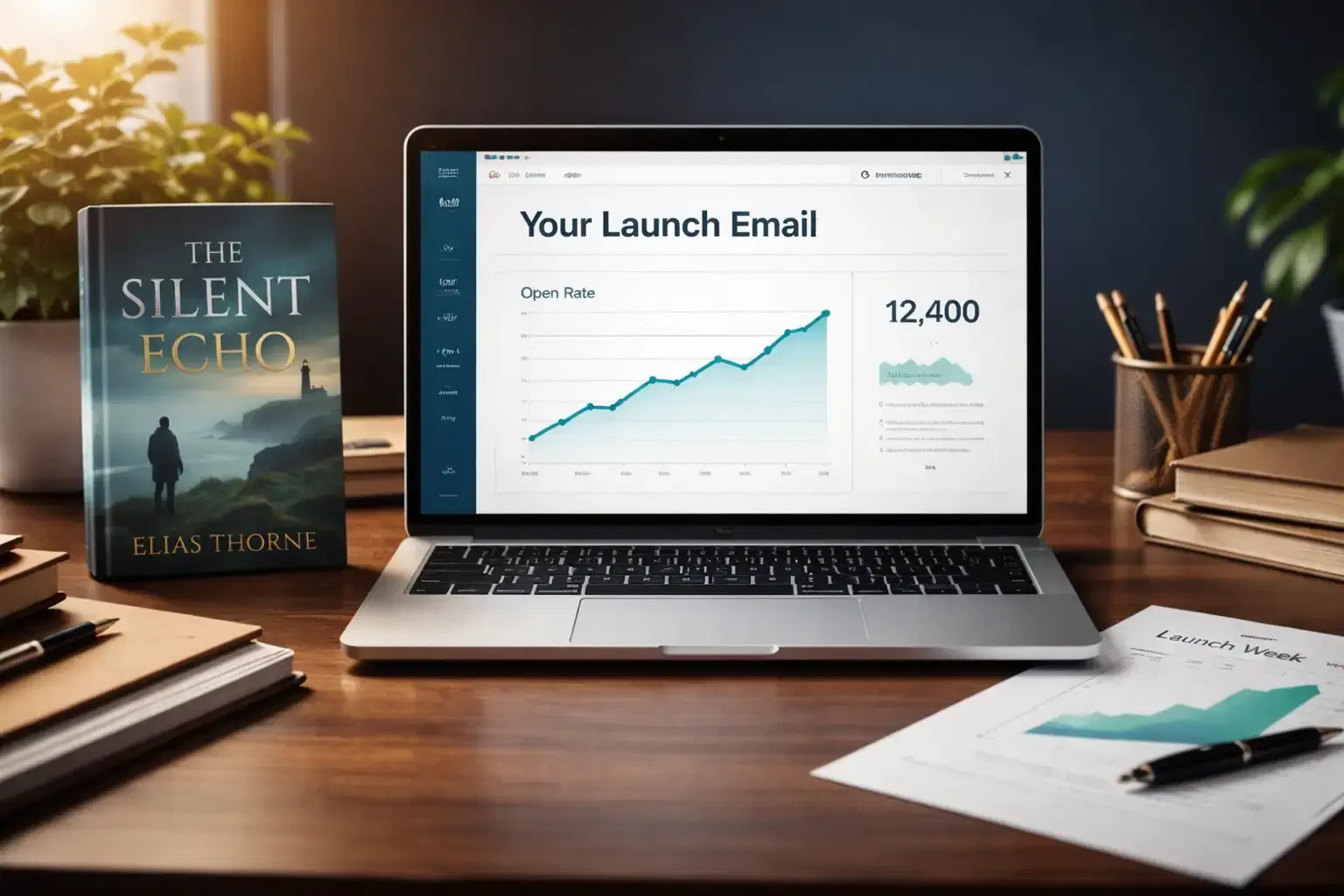
First Impressions Determine Whether Readers Buy
When a reader lands on an author website for the first time, they are making a rapid, largely subconscious judgment about whether this author is worth their time and money. A polished, coherent, professional site lowers the barrier to that purchase. It signals that the author treats their work seriously and that the reading experience is likely to match the quality of the website presentation.
The inverse is equally true. A site that looks dated, loads slowly, has blurry images, or has obvious template styling creates doubt. That doubt does not have to be conscious to affect behavior. Readers who feel uncertain about a purchase simply do not make it.
Email Lists Built Through Websites Outperform Every Other Sales Channel
Email marketing consistently delivers the highest return on investment of any digital marketing channel, and for authors, that advantage is particularly pronounced. An email subscriber who came through the author's website is a reader who has demonstrated active interest. They sought out the author's site, found it worth engaging with, and chose to maintain that connection.
Authors with email lists of even a few thousand genuinely engaged subscribers routinely outperform authors with larger social followings on launch day metrics. The author email list built through a well-designed website is a compounding asset. Every subscriber added today generates value on every future book launch.
Authors With Professional Websites Get More Media and Speaking Opportunities
The relationship between web presence and professional opportunity is direct. Authors with polished websites that include press pages, media kits, and clearly communicated expertise consistently receive more inbound inquiries for podcast appearances, speaking engagements, collaborative projects, and media coverage than equally talented authors who are harder to research and reach.
A podcast appearance reaching a new audience, a speaking engagement that puts the author in front of their ideal readers, a press feature that drives search traffic to the website, all of these generate long-term returns that a single book sale cannot. A professional author website is the infrastructure that makes these opportunities possible.
Organic Search Traffic Sells Books Without Ad Spend
An author website that ranks well in Google generates book sales that cost nothing per click. A reader who finds an author through a relevant search, reads several blog posts, gets onto the email list, and buys the backcatalog represents a customer acquisition cost of zero after the initial investment in building and optimizing the site.
Authors who have invested in organic search through their author website consistently report that it becomes their highest-ROI marketing channel over time, precisely because the initial investment keeps generating returns without ongoing spend. That kind of compounding return is not available through paid advertising, which stops the moment the budget stops.
DIY vs Professional Author Website Design - What the Difference Actually Looks Like
The comparison between building an author website yourself and having it built professionally is not just about cost. It is about time, quality, and what the site is actually capable of doing once it is live. Here is an honest look at where the two approaches diverge.
| Feature | DIY Website | Professional author website design service |
|---|---|---|
| Time to build | 80 to 150+ hours for most authors | 2 to 4 weeks, handled by specialists |
| Design quality | Template-based, rarely brand-specific | Custom, genre-informed, author-specific |
| SEO foundations | Often incomplete or incorrectly set up | Built in from the start, technically correct |
| Mobile performance | Frequently untested or broken on phones | Optimized across all devices as standard |
| Email capture and funnels | Typically missing or poorly placed | Integrated into the site architecture |
| Ongoing maintenance | Author handles it alone | Professional support available |
| Long-term ROI | Limited by technical and design gaps | Built to generate compounding returns |
The Real Cost Comparison
The cost of a professionally built author website is a one-time investment that generates returns across the entire life of the author's career. The cost of a DIY website is not zero. It is the sum of hours spent building and maintaining it, the sales lost to poor conversion design, the organic traffic lost to SEO mistakes, and the professional opportunities missed because the site does not present the author at their best.
Reframed honestly: the question is not whether to invest in an author website. It is whether to invest the time and skill personally or to invest financially in having it done right. For authors who want to sell books online at any meaningful scale, the return on a professionally built site tends to justify the investment relatively quickly.
What to Look for in an Author Website Design Service
Genre and Publishing Industry Experience
A generic web design agency can build a website. What they cannot do is understand how an author's website needs to function within the specific context of book marketing, reader acquisition, and the publishing industry's professional expectations. Author website design done well requires knowing what readers in different genres expect when they land on an author site, how Amazon and the author website work together in a reader's journey, and what signals of credibility matter to agents, media, and publishers.
Portfolio of Author Websites
Past work is the clearest available signal of what a service will produce. A portfolio of actual author websites demonstrates whether the service understands the specific visual and structural language of book marketing. Look at whether those sites have clear calls to action, whether the book pages are compelling, and whether the overall design communicates the author's genre and voice effectively.
SEO and Book Marketing Knowledge
The best author website builder service options understand that a beautiful site that no one can find is a partial solution at best. SEO foundations, keyword-informed copy, a content strategy that builds search authority over time, and an understanding of how the website fits into the author's broader marketing ecosystem are all part of what a genuinely knowledgeable service brings to the project.
Ongoing Support After Launch
An author's website needs to grow as their career grows. New books need to be added. The blog needs to continue publishing. Technical issues need to be addressed quickly when they arise. A service that builds a site and disappears leaves the author alone with a technical system they may not fully understand. Ongoing support, whether in the form of a maintenance package or readily available assistance, matters a great deal over the lifetime of the site.
Why Best Selling Publisher Builds Author Websites That Sell Books
Built Specifically for Authors and Their Readers
Every decision made in designing a Best Selling Publisher author website, the layout, the copy, the CTAs, the book page structure, the email capture placement, is made with the author's reader in mind. The website is not a general business site that happens to mention books. It is a marketing and sales tool built around how readers actually behave when they encounter an author online for the first time.
Designed to Grow Your Email List and Convert Visitors
The site is built as a conversion tool from the first page. Email capture, lead magnets, reader funnels, and clear purchase pathways are built into the structure of every website for authors we produce. The goal is not to give authors a place to exist online. It is to give them a system that actively grows their readership and generates sales.
SEO-Optimized From Day One
Technical SEO, keyword-informed copy, mobile performance, site speed, and a structure that search engines can read and reward are built in as standard, not added as afterthoughts. Authors who launch with Best Selling Publisher are positioned for organic growth from the moment their site goes live.
Part of a Broader Publishing and Marketing Ecosystem
Best Selling Publisher offers end-to-end publishing support across editing, formatting, cover design, book marketing, and author platform building. The author website does not exist in isolation. It is built to work alongside every other part of the author's publishing strategy, from Amazon optimization to email marketing to social media, so that each element reinforces the others rather than operating independently.
FAQs
Yes, and the reason is straightforward. Social media platforms are rented land. You do not own your followers, you cannot contact them directly without the platform's involvement, and your access to them can be restricted or removed at any time. An author website is the only platform you own entirely, where your audience is yours regardless of what any social network decides to do next.
DIY options using Wix or Squarespace can be started for under $200 per year in platform fees, but that cost does not account for the hours required to build and maintain the site or the limitations on what you can achieve without design and technical expertise. A professional website for authors from a service that understands book marketing represents a higher upfront investment, typically several hundred to a few thousand dollars depending on scope, but it delivers a site built to perform rather than simply to exist.
WordPress is the strongest long-term choice for most authors because of its flexibility, SEO capabilities, and the breadth of tools available for book marketing specifically. Squarespace is a reasonable option for authors who prioritize ease of use and have simpler needs. Wix is the most accessible to start but has the most limitations at scale. The right platform depends on the author's technical comfort, long-term ambitions, and what they actually need the site to do.
A professionally built author website typically takes two to four weeks from brief to launch, depending on the number of pages, whether custom design work is involved, and how quickly the author provides content like bio copy, book descriptions, and photography. Authors who come to the project with content prepared consistently see faster turnaround.
You can. The honest answer is that most authors who build their own sites produce something that functions adequately but underperforms professionally built sites on conversion, SEO, and design quality. The question is not whether it is technically possible. It is whether the result will be good enough to do the job the site needs to do, and whether the time investment is the best use of your capacity as an author.
A single-book author website can still be comprehensive and effective. The core pages are a homepage that introduces the author and the book, a dedicated book page with full description, reviews, and buy links, an author bio page, an email signup with a relevant lead magnet, and a contact page. A blog is optional at the one-book stage but worth starting early given its long-term SEO value. The goal is not to fill pages. It is to give readers, media, and industry professionals everything they need to engage with you and the book.
Traffic to an author website comes from several sources that work best in combination. Organic search through SEO-optimized blog content and book pages brings consistent long-term traffic. Social media drives short-term awareness and can funnel followers to the site. Email marketing drives direct traffic from subscribers on launch days and promotion periods. Podcast appearances, press coverage, and paid advertising each contribute additional traffic from their respective audiences. Building all of these channels simultaneously, with the website as the hub each one points toward, is how a sustainable author online presence gets built over time.