
What Makes Young Adult Books So Universally Loved by Readers of Every Single Age
Young adult books are supposedly written for teenagers, so why are millions of adults the ones who cannot put them down?
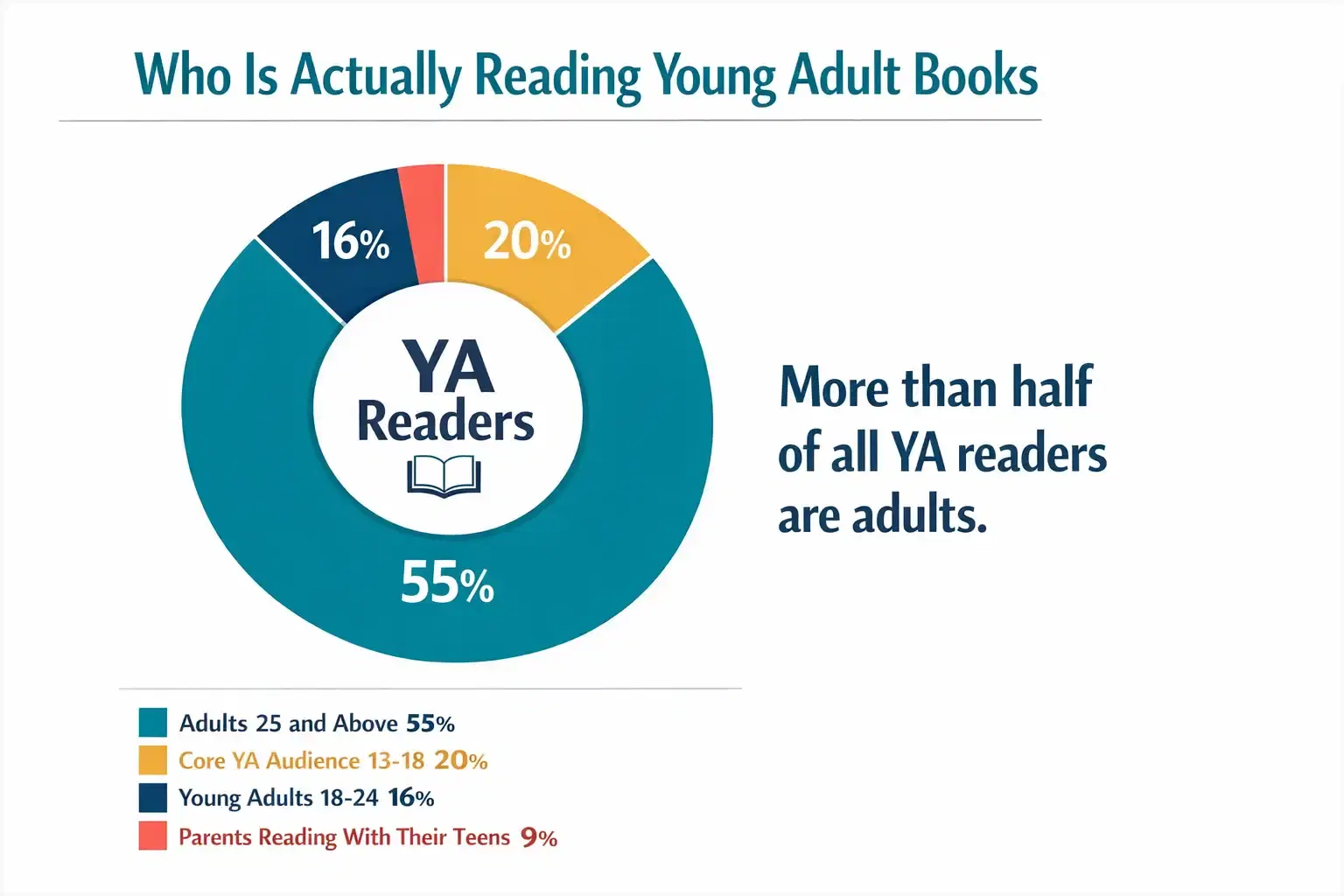
The data on this is striking and consistent. Surveys of young adult book purchasing repeatedly show that the majority of YA books bought in any given year are purchased by readers over the age of 18. Adults are not just occasionally dipping into YA, they are the primary market for a category that, by name and intention, was designed for someone else. And when you look closely at what the best young adult fiction actually does, this crossover readership stops being puzzling and starts being entirely predictable.
Young adult books handle the experiences that define the human condition, first love, first loss, the search for identity, the encounter with injustice, the terror and exhilaration of becoming who you are, with an emotional intensity and an absence of protective irony that adult literary fiction rarely matches. These are not lesser experiences because they happen first at seventeen rather than forty. They are, in many ways, the experiences that every subsequent experience in an adult life is unconsciously measured against. YA returns readers to those experiences with the full force of their original emotional weight, and that is something that readers at every age are hungry for.
In this blog, we are going to explore why young adult fiction crosses age boundaries so consistently, what genres and stories are defining the category right now, which books have become genuine cultural moments rather than just publishing events, and what it takes to publish a young adult book that genuinely reaches its readers.
Why Young Adult Books Connect With Readers of Every Age
The emotional intensity of young adult fiction is its defining quality, and it is the quality that explains its crossover appeal more precisely than any other. YA books are set during the period of life when everything is happening for the first time: the first serious romantic relationship, the first genuine experience of loss, the first encounter with injustice, the first moment of choosing who you want to be when everything around you is pulling you in different directions. These firsts carry an emotional charge that nothing subsequent can quite replicate, because the first time you experience something, you experience it with every nerve fully exposed, without the protective distance that familiarity eventually provides.
Adults who read YA are not reading it as an escape from the responsibilities and complexities of adult life. They are reading it because YA fiction accesses emotions that adult life has taught them to manage, and that management, however necessary, comes at a cost. The controlled emotional register of most adult literary fiction is partly a reflection of the author's age and experience. YA fiction, written about and often by people who are closer to those intense first experiences, does not have that management. It puts you back inside the feeling, and for many adult readers, that is something they cannot find anywhere else.
What YA authors understand about human emotion that adult fiction sometimes misses is that the intensity of adolescent experience is not a function of immaturity. It is a function of newness. Everything that happens during the YA years is genuinely new, and the response to genuinely new experience is always more intense than the response to familiar experience, regardless of the age of the person having it. YA fiction honors this intensity rather than condescending to it. And readers at every age recognize and respond to that honoring.
The Emotions Young Adult Books Are Brave Enough to Explore
Young adult fiction has earned a reputation for emotional courage, for going into emotional territory that other genres avoid or soften, and this reputation is deserved. The best YA authors understand that their readers are in the middle of experiencing things that adult society frequently tells them are not as serious as they feel. YA fiction tells them the opposite. It says: what you are feeling is real, it is important, and it deserves to be taken seriously.
First love, the intensity of romantic feeling at the moment when it is entirely new, is handled in YA fiction with a fidelity to the actual experience that adult romance fiction rarely achieves. The peculiar combination of euphoria, terror, vulnerability, and consuming attention that defines a first serious romantic relationship is something that adult romance writers sometimes romanticize from memory but YA writers often capture from a closer vantage point. John Green's The Fault in Our Stars handles young love in the presence of mortality with a precision that has made it one of the most emotionally affecting books of the past two decades, for readers of every age.
Identity, the active, often painful process of figuring out who you are when everything around you has an opinion about it, is the central theme of more YA fiction than any other. The YA novels that deal with identity questions specific to a particular reader's experience, their sexuality, their cultural background, their neurodivergence, their body, their family, have created some of the most passionate and most loyal readerships in contemporary publishing. These books are not just entertainment for the readers who most need them. They are survival tools.
Mental health, the honest portrayal of anxiety, depression, grief, eating disorders, and other experiences that older fiction and older generations have historically treated as shameful or private, is handled in YA fiction with a directness and a specificity that has genuinely changed how young readers understand and talk about their own psychological experiences. The YA novels that have addressed mental health honestly have reached readers who were struggling in isolation and given them language, recognition, and the evidence that they were not uniquely broken.
The Incredible Range of Stories That Live Inside YA
Young adult fiction is not a single genre. It is a category that contains multitudes, every genre that exists in adult fiction, filtered through the specific emotional register and developmental concerns of the YA readership, and often executed with an energy and an urgency that adult genre fiction sometimes lacks.
YA Fantasy and Dystopian
The largest and most commercially dominant corner of young adult publishing, and the highest-demand area for Young Adult book publishing services right now. YA fantasy and dystopian fiction gives its protagonists world-changing stakes, the fate of kingdoms, the overthrow of oppressive systems, the survival of something essential, and it demands that they rise to those stakes without the experience, the resources, or the support that adult heroes typically command. The Hunger Games trilogy is the defining example of the genre at its best: a protagonist who is neither exceptional nor comfortable with her own exceptionalism, navigating a system of extraordinary injustice with courage that is earned through genuine suffering rather than bestowed through specialness. The resonance of these stories with young readers who are beginning to understand the systems that shape their world is not accidental.
YA Contemporary
Contemporary YA fiction, stories set in the real world, dealing with the real experiences of real teenagers, is where the genre's emotional courage is most directly expressed. These books deal with family dysfunction, school violence, mental illness, racism, first love, sexual identity, and every other experience that the lived reality of adolescence contains, without the distance that fantasy settings provide. The Hate U Give by Angie Thomas, which deals with police violence and its aftermath through the experience of a sixteen-year-old girl navigating between two worlds, is the most powerful contemporary YA novel of the past decade, and its power comes directly from the specificity and the honesty with which Thomas describes an experience that her readers live.
YA Romance
Young adult romance is one of the most consistently beloved sub-genres in publishing, because it handles the specific emotional experience of first love with an attention and a seriousness that adult romance fiction, with its greater experience and its greater cynicism, sometimes loses. The best YA romance novels are not primarily about romance. They are about the way that falling in love changes how you understand yourself, the way that being truly seen by another person, for the first time, reveals something about who you are that you could not have discovered alone. Anna and the French Kiss by Stephanie Perkins, The Sun Is Also a Star by Nicola Yoon, and To All the Boys I've Loved Before by Jenny Han are all examples of YA romance that have reached far beyond any demographic boundary to become genuinely universal love stories.
YA Thriller and Mystery
YA thriller and mystery fiction generates the same addictive narrative tension as adult thriller, the compulsive forward momentum of needing to know what happens next, but with the additional intensity of protagonists who have fewer resources, less experience, and more immediately personal stakes than their adult counterparts. Karen McManus's One of Us Is Lying, which sets a classic Breakfast Club scenario against a murder mystery and a cast of unreliable narrators, became a genuine publishing phenomenon, not just because the mystery is genuinely well-constructed but because the emotional stakes of the social dynamics it explores feel completely real to the teenage readers at its center.
The Young Adult Books That Became Cultural Phenomena
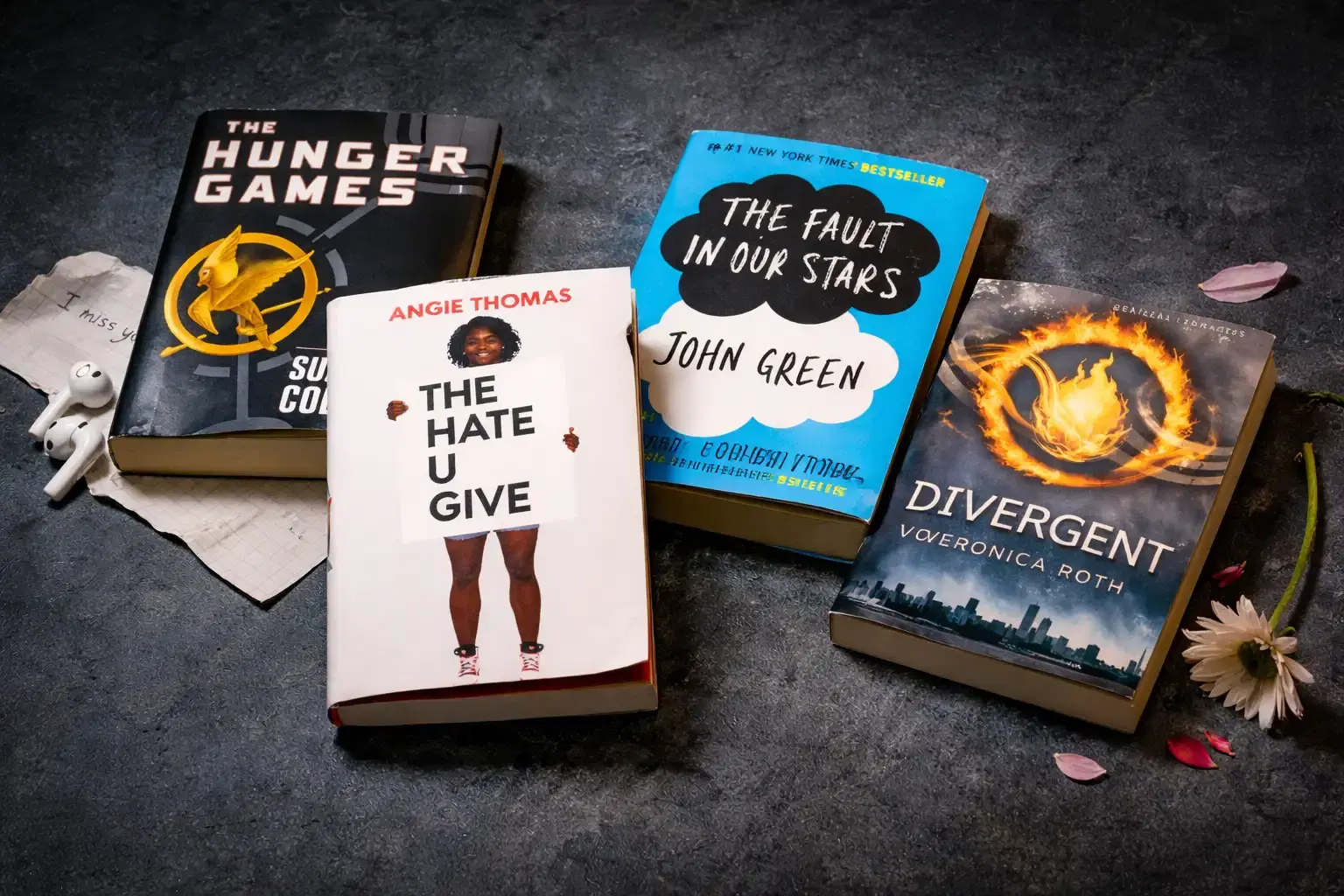
The YA books below did not simply sell well or receive strong reviews. They became moments in culture, books that changed how readers talked about the experiences they depicted, that created communities of readers who found each other through their shared passion for the story, and that demonstrated what the genre is capable of when it is working at its absolute best.
The Hunger Games by Suzanne Collins
The most commercially successful dystopian YA series ever published, and a genuine cultural event that reached far beyond any demographic category. Katniss Everdeen is one of the most compelling protagonists in contemporary fiction, not because she is exceptional in the ways that genre heroes typically are, but because her exceptionalism is imposed on her by circumstances she did not choose and does not particularly want. The trilogy's exploration of media, spectacle, trauma, and the compromises required to survive in an unjust system resonated with readers who were beginning to understand those systems in their own lives, and it did so with a plot machinery so efficient and a moral vision so clear that it has been studied as a political document as well as a work of fiction.
The Fault in Our Stars by John Green
John Green's 2012 novel about two teenagers with cancer who fall in love is the book that most clearly demonstrated the crossover potential of YA fiction to a generation of readers and publishers who had underestimated it. Hazel and Augustus are written with such intelligence, wit, and emotional precision that the novel reads simultaneously as a teenage love story and as one of the most serious meditations on mortality and meaning published in the past two decades. The book's commercial success was extraordinary, weeks on the bestseller list, a major film adaptation, but its cultural significance is deeper than its sales figures. It changed how readers thought about what YA could do.
The Hate U Give by Angie Thomas
Published in 2017 in the immediate cultural context of the Black Lives Matter movement, Angie Thomas's debut novel follows sixteen-year-old Starr Carter as she witnesses the police shooting of her childhood best friend and navigates the aftermath across two worlds, the predominantly Black neighbourhood where she lives and the predominantly white private school where she studies. The book is a masterwork of YA contemporary fiction: deeply specific about the experience it depicts, formally accomplished in its structure and pacing, and morally serious in ways that have made it genuinely useful to readers who needed both a mirror and a window for understanding this aspect of American life.
Harry Potter and the Sorcerer's Stone by J.K. Rowling
Published originally as a children's book and subsequently recategorized across multiple publishing markets, the Harry Potter series is the most important young reader publishing event of the past three decades, and its cultural significance as a YA touchstone is undeniable. The series created the concept of a genuinely crossover readership for children's and young adult fiction in the modern publishing era, demonstrating that books written for young people could reach adults with equal or greater force. Every discussion of why young adult fiction matters begins, implicitly or explicitly, with what Harry Potter proved was possible.
Divergent by Veronica Roth
Veronica Roth's dystopian trilogy, which begins with Divergent and follows Tris Prior through a Chicago divided into five personality-based factions, captured the particular anxieties of a generation of young readers who were being asked to choose identities and futures before they had finished figuring out who they were. The series resonated because the question at its center, who am I, really, and does one category contain everything I am?, is the exact question that adolescence makes inescapable. Roth's willingness to follow her narrative to genuinely dark and uncompromising conclusions distinguished the series from more comfort-oriented dystopian fiction.
The Perks of Being a Wallflower by Stephen Chbosky
Stephen Chbosky's epistolary novel about Charlie, a freshman in high school processing serious trauma while navigating new friendships and first experiences of everything, has been one of the most consistently read and most consistently challenged YA novels since its publication in 1999. Its honesty about mental illness, sexual abuse, and the specific texture of adolescent consciousness has made it essential reading for many teenagers who found in Charlie's voice an accuracy to their own interior experience that they had not encountered elsewhere.
To Kill a Mockingbird by Harper Lee
Published in 1960 and technically an adult novel, To Kill a Mockingbird has been read more widely as a YA coming-of-age novel than as anything else, and its long presence on middle school and high school reading lists - six decades of it, though never universal, and challenged or dropped in a number of districts in recent years - confirms that its emotional and moral intelligence is precisely calibrated for the developmental stage of its most devoted readers. Scout Finch's narrative of a childhood in which innocence is lost through the encounter with racial injustice remains one of the most powerful accounts in American literature of the specific moment when a young person first understands what the world is, and chooses who they want to be in response.
An Ember in the Ashes by Sabaa Tahir
Sabaa Tahir's fantasy series, set in a world inspired by ancient Rome and exploring the intersecting stories of a Scholar girl and a soldier, represents the best of what contemporary YA fantasy is doing: building fully realized secondary worlds with genuine historical and cultural specificity, populating them with protagonists whose moral complexity is treated as an asset rather than a problem, and using the fantasy setting to explore real questions about power, resistance, identity, and love with an honesty that the genre setting makes possible rather than limits.
Why YA Authors Are Some of the Most Socially Important Writers Working Today
Young adult authors write for readers at the exact moment when they are forming their worldview, and authors who publish young adult books carry a responsibility that few other writers share, when the values, beliefs, and frameworks they are developing will shape how they understand and engage with the world for the rest of their lives. This gives YA authors a specific kind of cultural responsibility that writers in other categories simply do not have, and the best of them take that responsibility with complete seriousness.
When Angie Thomas wrote The Hate U Give, she was not just telling a story about police violence. She was giving young readers, both those who live with this reality and those who do not, a framework for understanding it: a way of holding the complexity of the situation that was simultaneously specific and honest. When Malinda Lo writes about queer Asian American teenage girls finding themselves and each other, she is doing something that has measurable effects on the readers who needed those characters to exist. When Jason Reynolds writes about Black boys navigating systems designed to fail them, he is reaching readers who have never seen their experience reflected in a book before, and the impact of that recognition on a young reader's relationship with books, with stories, and with their own worth is profound.
How books like The Hate U Give and The Perks of Being a Wallflower changed real conversations in the real world is a documented phenomenon, not a publishing talking point. These books have been credited by readers with helping them understand their own experiences, talk to their parents about things they could not previously articulate, seek help for mental health struggles they had previously been ashamed of, and recognize the humanity of people whose experiences were entirely different from their own. A book that achieves any one of these things is doing something important. YA regularly achieves all of them simultaneously.
What Young Adult Readers Are Passionate About in 2026
The young adult publishing market in 2026 is more dynamic, more diverse, and more culturally connected than at any point in its history. Authors who publish young adult books today are entering a market shaped by passionate online reading communities and unprecedented reader influence, shaped by social media communities that have given readers unprecedented influence over which books succeed, and by a readership that is more vocal and more specific about what it needs from the stories it chooses.
YA fantasy and romantasy, fantasy fiction with a central romantic storyline that gives equal weight to the world-building and the emotional relationship, is the dominant commercial force in the category right now and shows no signs of slowing. The success of Sarah J. Maas's A Court of Thorns and Roses series, which began as YA and developed a massive adult crossover readership, opened the door for a wave of romantasy publishing that is reshaping the category. The combination of fully realized fantasy worlds with intensely emotional romantic relationships is proving irresistible to readers of a very wide age range.
Mental health representation has moved from a sub-genre concern to a mainstream expectation in YA fiction. Readers, and the influential BookTok communities that amplify their preferences, have made it clear that they expect contemporary YA fiction to engage honestly with anxiety, depression, trauma, and other mental health experiences rather than treating them as exceptional or shameful. The books that do this well are being championed across social media with the kind of passionate advocacy that no marketing budget can buy.
BookTok, the TikTok reading community that has become the single most influential force in YA publishing, has transformed how books in this category succeed or fail. A YA book that connects with a single influential BookTok creator can go from midlist obscurity to bestseller status in a matter of weeks, and publishers and authors are increasingly designing and positioning their books with BookTok's specific tastes and recommendation patterns in mind. For YA authors, understanding and engaging with this community is as important as any traditional marketing activity.
How to Find Your First Young Adult Book If You Have Never Read the Genre
The best entry point into YA fiction depends on what kind of reading experience you are looking for, and the good news is that within the YA category, almost every kind of reading experience is available in some form.
If you are looking for emotional intensity and the experience of a love story told with complete commitment, start with The Fault in Our Stars by John Green or To All the Boys I've Loved Before by Jenny Han, both of which are accessible, deeply felt, and likely to convert a YA skeptic into a YA enthusiast within the first fifty pages. If you are more drawn to action, world-building, and the pleasure of a fully realized secondary world, start with The Hunger Games or An Ember in the Ashes. If you want the experience of contemporary realism, a story set in the real world that deals with real experiences with complete honesty, start with The Hate U Give or The Perks of Being a Wallflower.
The single most reliable guide to YA recommendations is the BookTok community; searching for the books that are being most enthusiastically discussed will consistently surface the titles that are resonating most strongly with readers right now. But the more important principle is to start with something that genuinely interests you, rather than something that seems appropriate. YA rewards readers who bring genuine curiosity to it, and it tends to deliver its best experiences to readers who choose it freely rather than tentatively.
How Best Selling Publisher Publishes Young Adult Books
Young adult publishing requires a specific understanding of the YA reader, of the emotional register the genre demands, the cover design language that attracts the right audience, the marketing channels that reach both teen readers and the adult readers who make up a significant portion of the YA market, and the specific craft expectations that distinguish YA from both middle grade and adult fiction. At Best Selling Publisher, we bring all of this expertise to every YA manuscript we work with.
Our Young Adult book publishing services support every YA author on the specific craft challenges of the form: maintaining the voice authenticity that YA readers recognize and require, developing the emotional arc alongside the narrative arc, and ensuring that the protagonist's journey delivers the specific combination of intensity and resolution that the genre's readership expects. Our editorial process for YA manuscripts takes both the genre's conventions and the individual author's vision seriously, because the best YA fiction honors the tradition while finding its own specific and irreplaceable place within it.
Cover design for YA titles is one of the highest-stakes design decisions in publishing, because YA readers judge books by their covers more explicitly and more decisively than almost any other readership. Our design team creates covers that speak directly to the specific YA audience a book is designed for, using the visual language that this generation of readers recognizes and responds to. Our Amazon book publishing strategy and BookTok-aware marketing positioning ensures your YA book reaches readers through the channels that actually drive YA book discovery in 2026. Authors work with Best Selling Publisher with their most important work, and our Young Adult book publishing services have helped YA authors reach readers across every age group.
Conclusion
Young adult fiction will always be the genre that reminds every reader what it felt like to experience the world for the very first time. Not the comfortable world. Not the managed world. The world as it actually presents itself to someone who has not yet built up the defenses that adult life teaches, raw, enormous, intensely beautiful, and genuinely terrifying in equal measure. That experience does not age out of relevance. It remains, for most people, the most vivid and the most formative experience of their lives. And the fiction that captures it with honesty and courage will always find readers, at every age, who recognize what it is doing and are grateful that it exists.
The young adult book that reaches a reader at the right moment, whether that reader is fourteen or forty-four, does something that no other category of fiction can quite replicate. It puts them back inside the feeling. It reminds them of who they were before the world taught them to want less than everything. And it sends them back to their own life with the particular energy of someone who has just been reminded that the intensity they once felt was real, and that real things do not stop mattering just because they were felt a long time ago.
FAQs
Young adult fiction is primarily written for readers between the ages of 13 and 18, though its readership extends significantly beyond this range. As we have explored throughout this guide, the majority of YA books purchased in any given year are bought by readers over 18, including a very substantial adult readership. The age designation describes the developmental stage the books are designed to speak to rather than the actual demographic of their readers. If you are over 18 and drawn to YA fiction, you are in the majority of the category's readers, not an exception.
Adults read YA for several reasons that are understandable once you look at what the genre actually offers. YA fiction handles emotional intensity without the protective irony or controlled distance that adult literary fiction often employs. It deals with experiences, first love, identity formation, the encounter with injustice, that remain emotionally significant long after they have passed. It tends to prioritize narrative momentum and emotional engagement over the formal experimentation that adult literary fiction sometimes values. And it is being written by authors who are, in many cases, among the most gifted storytellers working in any category of contemporary fiction.
Young adult fiction targets readers from approximately 13 to 18, while middle grade targets readers from approximately 8 to 12. YA novels typically feature older protagonists, usually between 14 and 18, and deal with experiences and emotional territory appropriate to that age range, including romantic relationships, sexual identity, complex moral ambiguity, and the encounter with adult systems of power. YA can go darker and can leave readers in more unresolved territory than middle grade. Middle grade maintains a fundamental orientation toward hope and resilience that YA, which is more willing to sit with difficulty, does not always share.
The dominant YA genres in 2026 are YA fantasy and romantasy, fantasy fiction with a strong romantic storyline, which continues to grow rapidly and reach readers across a very wide age range. YA contemporary fiction, particularly stories dealing with mental health, diverse experiences, and social justice, is also performing strongly. YA thriller and mystery, which combines the genre's characteristic emotional intensity with the narrative pull of a well-constructed mystery, is consistently popular. And YA romance, particularly in series format with slow-burn relationship arcs, has never been more enthusiastically read and recommended.
Most young adult novels fall between 60,000 and 90,000 words. YA fantasy novels, which require more extensive world-building, often run longer, 80,000 to 100,000 words is common, and some of the most successful YA fantasies are longer still. YA contemporary novels, which typically do not require world-building, tend to fall in the lower half of the range. The appropriate length is determined by the story, YA readers will sustain engagement with longer books when the pacing and emotional momentum earn it, and will abandon shorter books that do not.
Working with a publishing partner who understands the specific requirements of YA publishing, including its cover design conventions, its marketing channels, and the craft expectations of its sophisticated readership, is the most effective route for most YA authors. Best Selling Publisher offers complete young adult publishing services, from manuscript editing and voice development through cover design, Amazon KDP publishing, and marketing strategy specifically calibrated for the YA readership and its digital communities. Contact our team to learn how we can help your YA story reach the readers who are waiting for it.